Teeth.com · Patient education
Tooth symptoms and dental costs
Understand your symptoms and prepare for your next conversation with a dentist.
General dental education—not a diagnosis or personal treatment advice. A dentist who examines you can explain which options fit your situation. Educational limitations.
Toothache: possible causes and how dentists investigate.
A sharp twinge, an ache that returns, or pain that keeps you awake can have different causes. The pattern helps your dentist investigate; it cannot tell you the diagnosis on its own.
When to seek help
For readers in the United States: call 911 for a medical emergency. For urgent dental problems, contact a local dentist. NHS references below are U.K. clinical information; their telephone numbers and service arrangements are not U.S. instructions. ADA: dental emergencies.
Get emergency help if swelling interferes with breathing, swallowing or speaking, or spreads around your eye or neck. Do not wait for a routine dental appointment.
Contact a dentist promptly for severe or persistent pain, lingering pain after hot or cold, or cheek or jaw swelling. Report fever, a bad taste or pain when biting when you call. Ask the office how urgently you should be seen.
If the office is closed, check its recorded out-of-hours instructions. If you do not have a dentist, ask a local dental office about an urgent appointment. You do not need to wait a set number of days before asking for help.
Sources: NHS (United Kingdom): toothache and emergency signs · AAE: tooth-pain symptoms
What might be causing it?
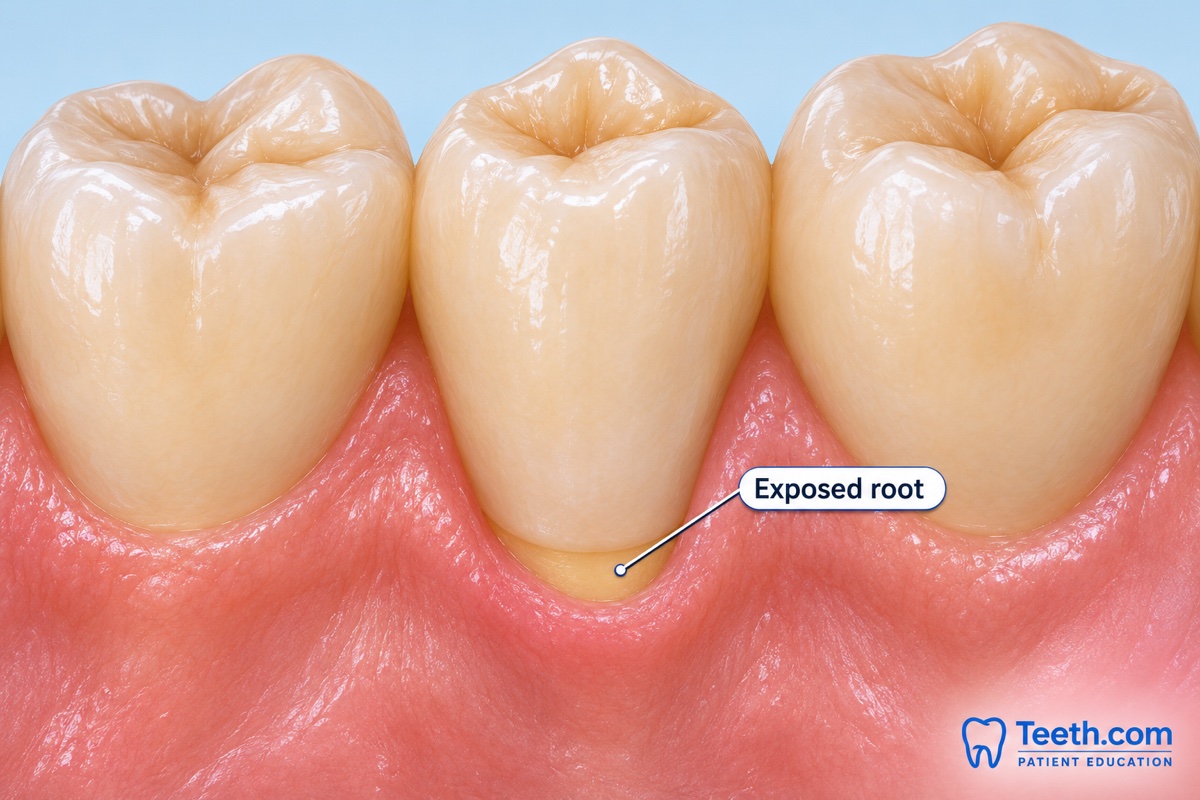
A brief hot or cold twinge
An exposed root, decay or a loose filling can cause sensitivity. If it keeps happening, arrange a dental check. More about sensitivity →
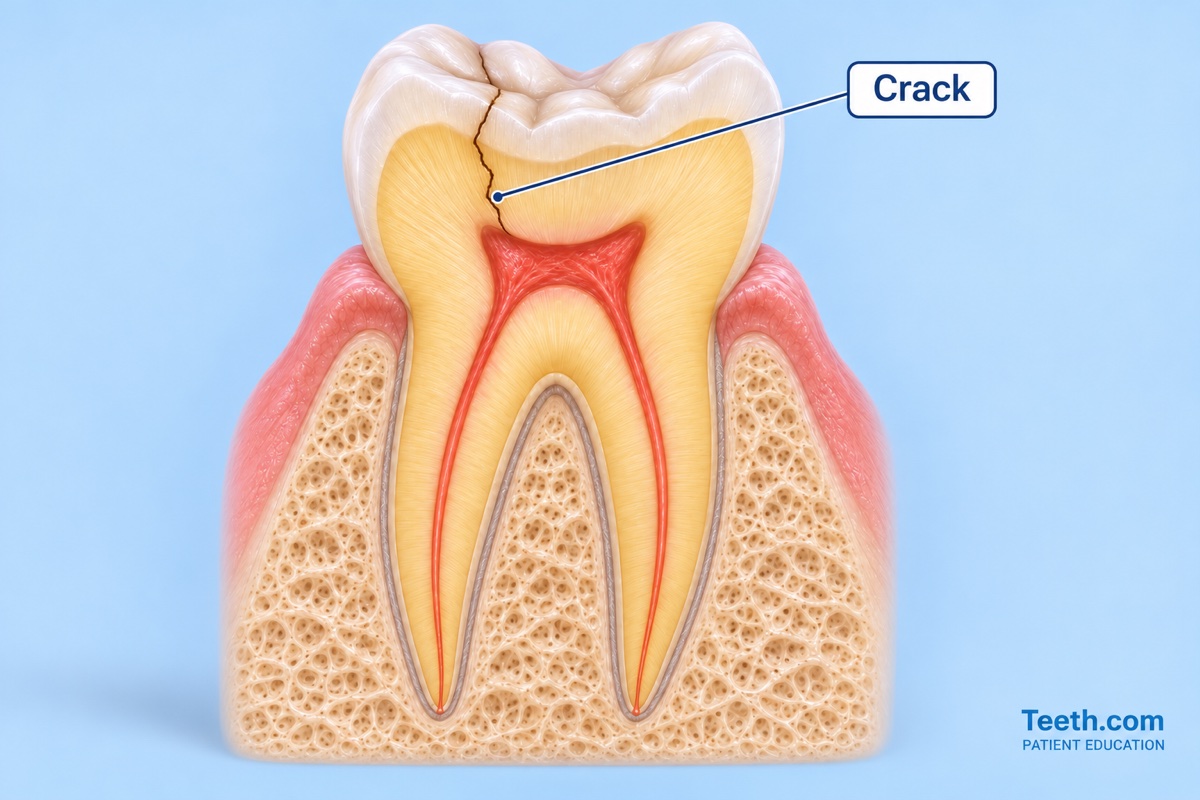
Pain when you bite
A crack, decay or a loose filling may be involved. Biting pain alone does not prove that a tooth is cracked. More about cracked teeth →
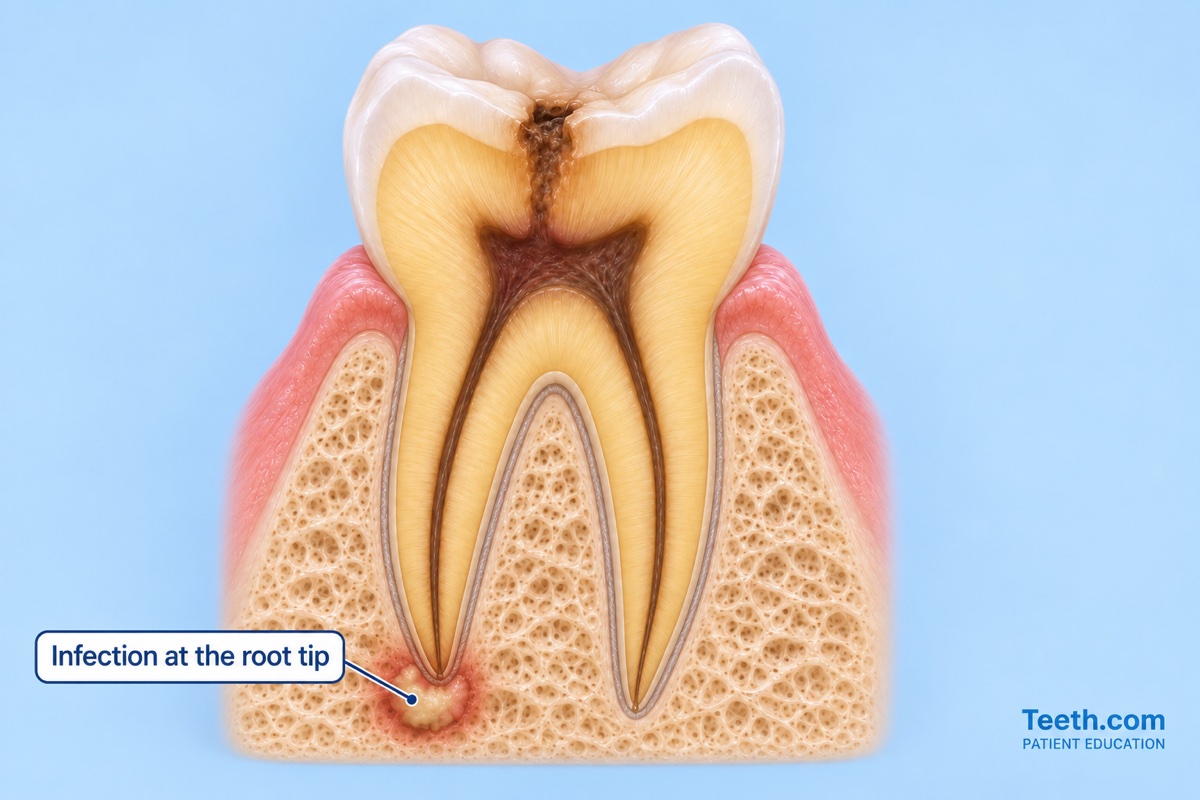
Pain that lingers or throbs
Inflammation or damage inside the tooth may be involved. Severe constant pain with swelling can occur with infection. These patterns need professional assessment. The illustration shows an infection example; pain alone cannot establish that infection is present.
AI-assisted illustrations show examples, not a diagnosis. Select an image to enlarge it. Source: AAE tooth-pain guide · AAE: abscessed teeth.
What will the dentist check?
Your dentist combines your history with an examination of the teeth, fillings and gums. They may compare responses to cold, tapping or biting and take appropriate X-rays. The findings together help identify the source and guide treatment; one symptom or test is not enough.
Source: AAE: Endodontic Diagnosis (2013).
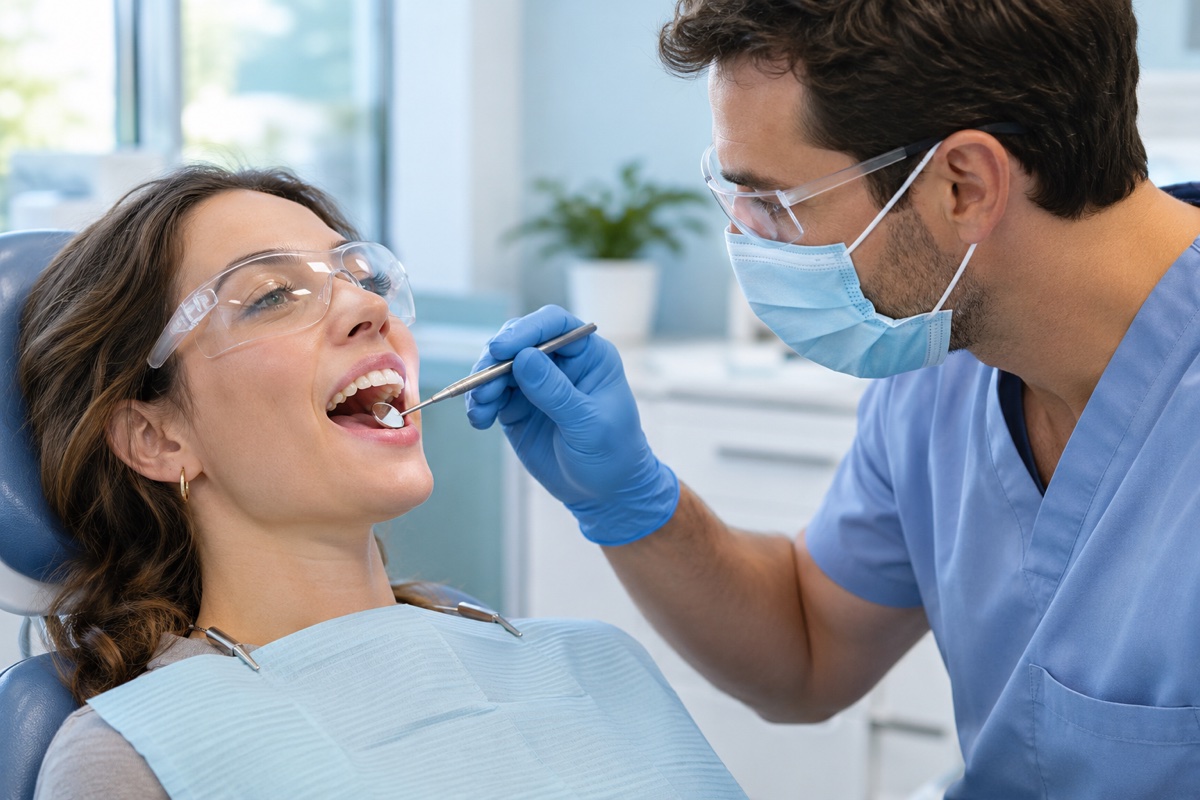
A mirror helps the dentist see tooth surfaces during the examination. Your symptoms and the other checks help complete the picture.
AI-generated examination scene for illustration; not a real patient photograph.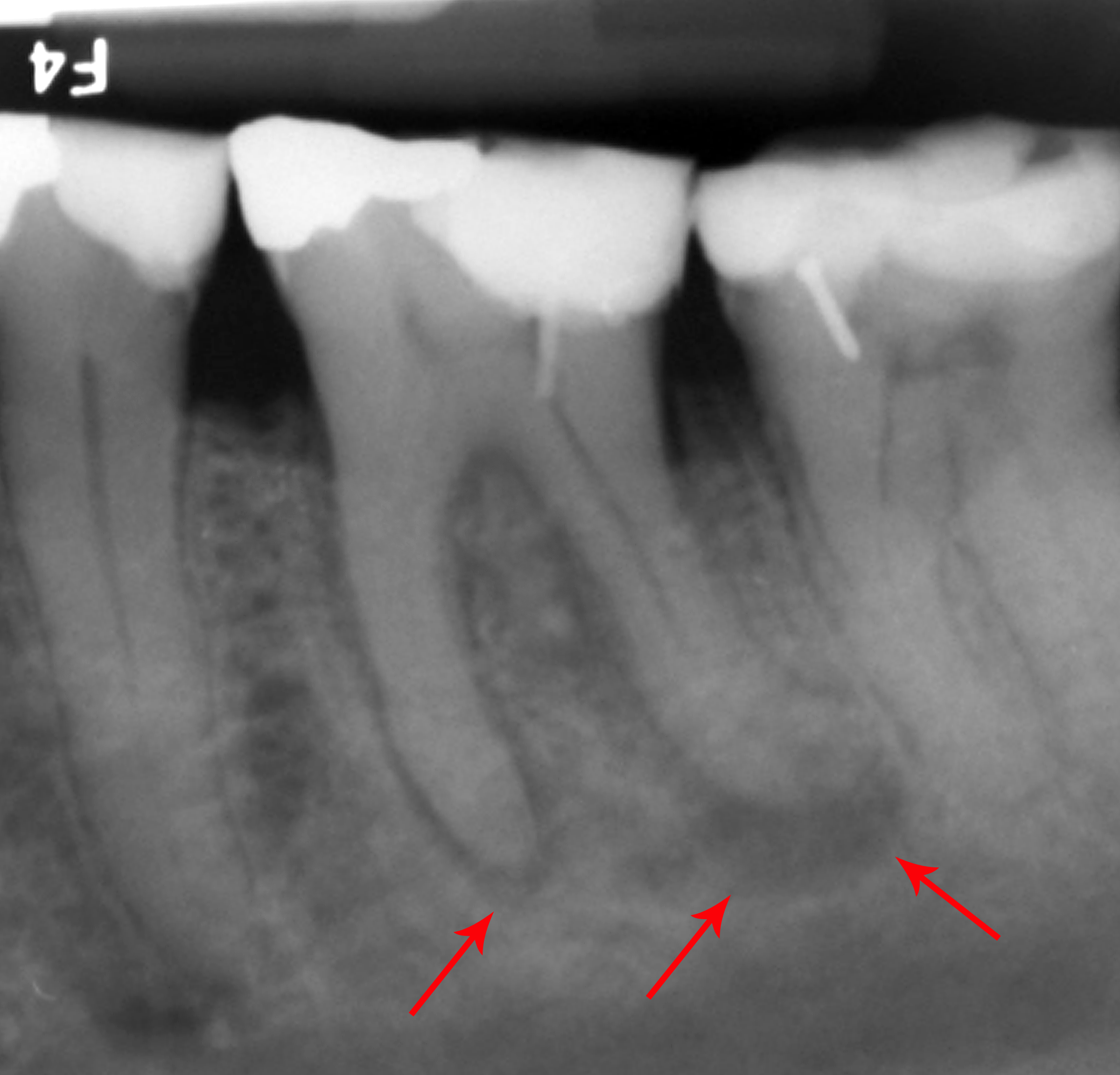
This real X-ray is described by its source as an abscessed lower molar. The red arrows mark areas around its root tips. It is a separate example from the illustration above, not the same tooth or patient.
X-ray: Coronation Dental Specialty Group / Wikimedia Commons · CC BY-SA 3.0. Unchanged; arrows are in the original.
Select either image to enlarge it. Your dentist interprets X-rays together with your symptoms and examination.
While arranging care
Choose soft foods, avoid chewing on the sore tooth and avoid very hot, cold or sweet foods that trigger discomfort. Ask a pharmacist which nonprescription pain medicine is suitable for you and follow the label. These measures do not replace treatment of the cause.
Source: NHS (United Kingdom): easing toothache while waiting for care (reviewed July 2024).
Make the call easier
Have these details ready. You do not have to know which tooth is responsible.
- Where and when: the area that hurts, when it began and any recent dental work or injury.
- The pattern: constant or on and off; triggered by biting, hot or cold; how long it lasts.
- Other changes: swelling, fever or a bad taste. Mention breathing or swallowing problems immediately and seek emergency care.
- Your health: medicines you take, allergies and what you have already tried for the pain.
Ask: “How urgently should I be seen? What changes mean I should seek help sooner?”
History checklist informed by AAE diagnostic guidance.
Sensitive teeth: why does cold make them hurt?
A sip of cold water, a hot drink or brushing can set off a sharp twinge. Tell your dentist what triggers it and whether it stops quickly or keeps hurting afterward. The pattern is a clue, not a diagnosis.
Why can a tooth become sensitive?
Enamel covers the crown; cementum covers the root. Underneath is dentin, which contains microscopic channels. When dentin becomes exposed, temperature changes can stimulate the sensitive tissues inside.
Exposed roots or worn enamel
Receding gums can expose root surfaces. Loss of enamel can expose dentin on the crown. Either may contribute to sensitivity.
Decay, a worn filling or a crack
These can also cause sensitivity. A sensitive-teeth toothpaste does not repair decay or a broken tooth. An examination helps distinguish the causes.
AI-assisted illustrations show examples. Source: ADA: sensitive teeth.
Did it start after dental work or whitening?
Dental treatment can temporarily irritate the tissues inside a tooth, and whitening can also cause sensitivity. Tell the treating office when it started and whether it is improving or worsening. Do not assume new pain is harmless simply because you recently had treatment.
Sources: AAE: pain after dental treatment · Mayo Clinic: sensitivity and whitening.
When should I call?
- A brief twinge that keeps returning: arrange a dental check to identify the cause.
- Pain that lingers after hot or cold, pain when biting, or worsening pain: contact your dentist promptly. Describe how long the pain lasts after the trigger is gone.
- Swelling, fever or a bad taste: report these when calling for dental care; do not treat them as ordinary sensitivity.
If swelling affects breathing, swallowing or speaking, or spreads around the eye or neck, seek emergency care now.
Sources: AAE: tooth-pain patterns · NHS (United Kingdom): dental and emergency warning signs. You do not need to wait a fixed number of days before asking for help.
What may help—and what needs treatment?
Common approaches to sensitivity include gentle brushing and, when appropriate, desensitizing toothpaste. Suitable care depends on the cause. Desensitizing toothpaste may take repeated use to help; abrasive products and whitening can contribute to symptoms.
Treatment depends on the cause. Your dentist may suggest fluoride, a protective coating for an exposed root, or repairing a filling or decay. Persistent pain needs assessment rather than simply trying more toothpaste.
Sources: Mayo Clinic: care and treatment options (June 2024) · ADA: desensitizing toothpaste and treatment.
What will the dentist check?
Your dentist looks for exposed roots, wear, decay and problems with existing fillings, and uses your symptom history to decide which checks are needed. See how an examination and appropriate X-rays help complete the picture →
Bring these details to your visit
- Which tooth or area hurts—and whether more than one tooth is affected.
- The trigger: cold, heat, sweets, brushing or biting.
- How long the pain lasts after the trigger stops, and whether it happens on its own.
- Recent fillings, whitening or other dental work, and whether symptoms are changing.
Ask: “What is causing the sensitivity? What should I try, and what changes mean I should call you again?”
Pain when you bite: could it be a cracked tooth?
Pain on biting or letting go, or sensitivity to hot and cold, can occur with a crack. Symptoms may come and go. Call your dentist promptly if you suspect a crack; pain alone cannot confirm one.
Why can a crack hurt?
Pressure can irritate the tissues inside
Chewing may move the cracked parts slightly and irritate the pulp, the tissue containing nerves and blood vessels. A crack can also cause temperature sensitivity.
Source: AAE: cracked-tooth symptoms and anatomy.
How does the dentist investigate?
Your dentist combines the story of your pain with several checks. These may include a controlled bite test, cold testing, gum measurements, magnification and a light shone through the tooth. X-rays help assess the tooth and surrounding tissues, but a crack may not be visible on a routine X-ray. No single finding tells the whole story.
Source: AAE: cracked teeth and vertical root fractures (2022). See our examination and X-ray examples →
Does every crack need a crown or root canal?
No. Treatment depends on the crack’s location and depth, the remaining tooth structure and the condition of the pulp.
- A chip or broken chewing cusp: a fragment may be reattached, or a filling or crown may restore the tooth.
- A crack involving the pulp: root-canal treatment and protection with a crown may be considered.
- A deeply split or root-fractured tooth: saving the whole tooth may not be possible. Ask which options are realistic for your tooth.
A crown can protect a cracked tooth, but it does not make the crack heal or guarantee that it will stop progressing.
Sources: AAE: treatment and limitations · NHS (United Kingdom): repairing a damaged tooth (January 2025).
Dental assessment and temporary precautions
Call a dental office and describe the symptoms, any injury and whether a piece has broken off. Ask how urgently you should be seen. While arranging care, choose soft foods and avoid chewing on the painful tooth. If you have a broken fragment, keep it in milk or your saliva in a container and bring it to the dentist; it may be possible to reattach it.
Report swelling, fever or a bad taste when you call. If swelling affects breathing, swallowing or speaking, or extends around the eye or neck, seek emergency medical care now.
Sources: NHS (United Kingdom): broken-tooth care · NHS (United Kingdom): interim care and emergency signs.
Make the conversation easier
- Point to the area if you can; say if you cannot identify the tooth.
- Describe whether it hurts on biting, on release, with hot or cold, or on its own.
- Note when it started, any injury or recent dental work, and whether symptoms are changing.
Ask: “What did the checks show? How far does the crack appear to extend? What can each treatment protect, and what uncertainty remains?”
What will my dental care cost?
Ask for a written estimate for each treatment option. Ask which visits and services it includes, and check any deductible, annual limit or waiting period with your plan before scheduling.
For insurance, ask what the plan pays and what you owe. For a discount plan, check the membership fee, participating dentists, and the fee for your specific procedure. If paying over time, ask about interest and the total cost.