Repair & preserve
Crowns, Inlays & Onlays
See how crowns, inlays and onlays differ in coverage, preparation and the tooth structure they preserve.
The difference is how much of the tooth is covered
All three are made separately and then bonded or cemented to the tooth. Before recommending one, your dentist checks for decay, cracks and weakened areas, the amount of strong tooth remaining and your bite. The location and extent of these findings help determine how much coverage is needed.
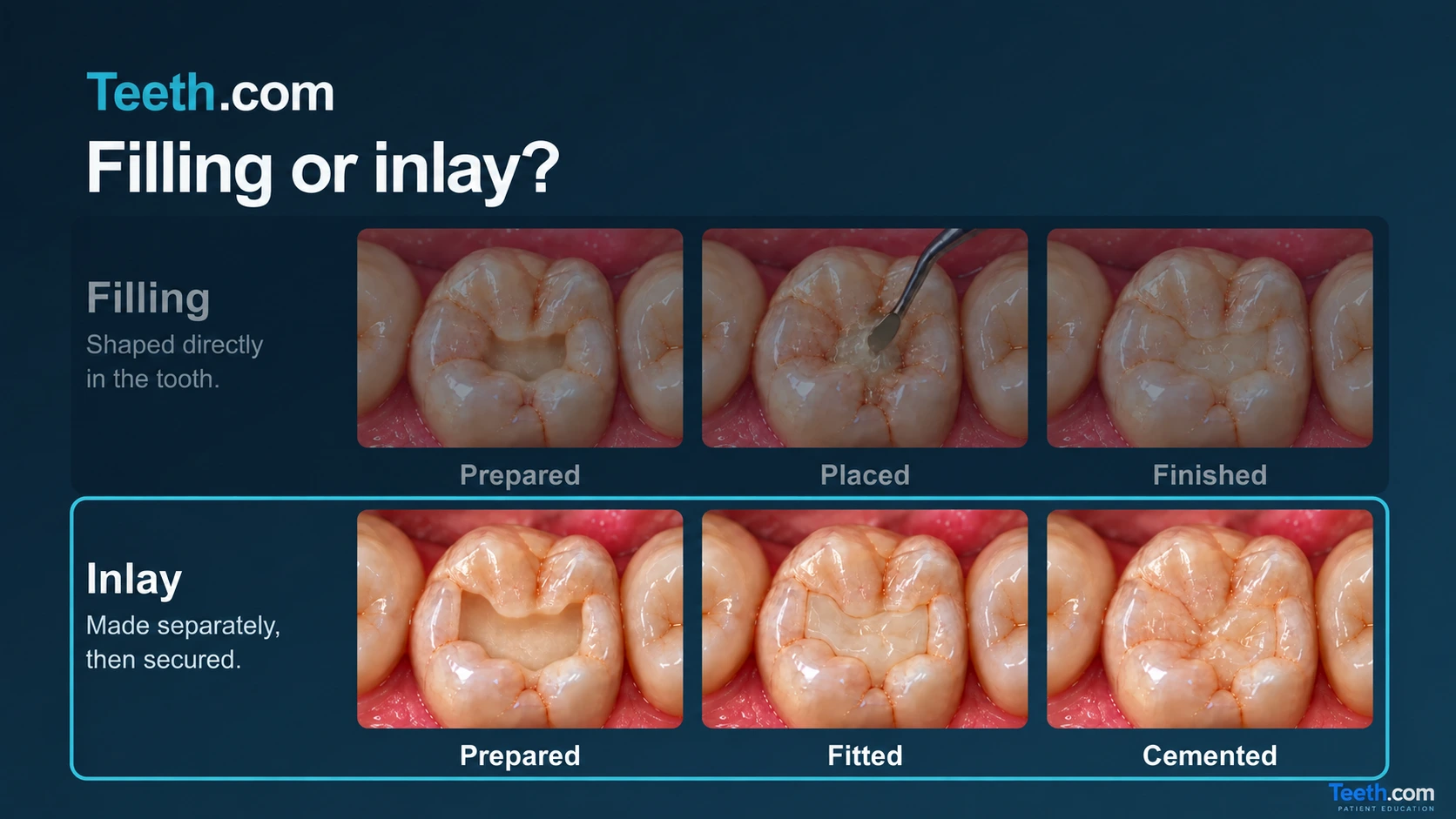
Inlay: fits within the tooth
An inlay is made separately and secured within the prepared area, between the cusps—the raised chewing points. The illustration also shows how a filling is shaped directly in the tooth.
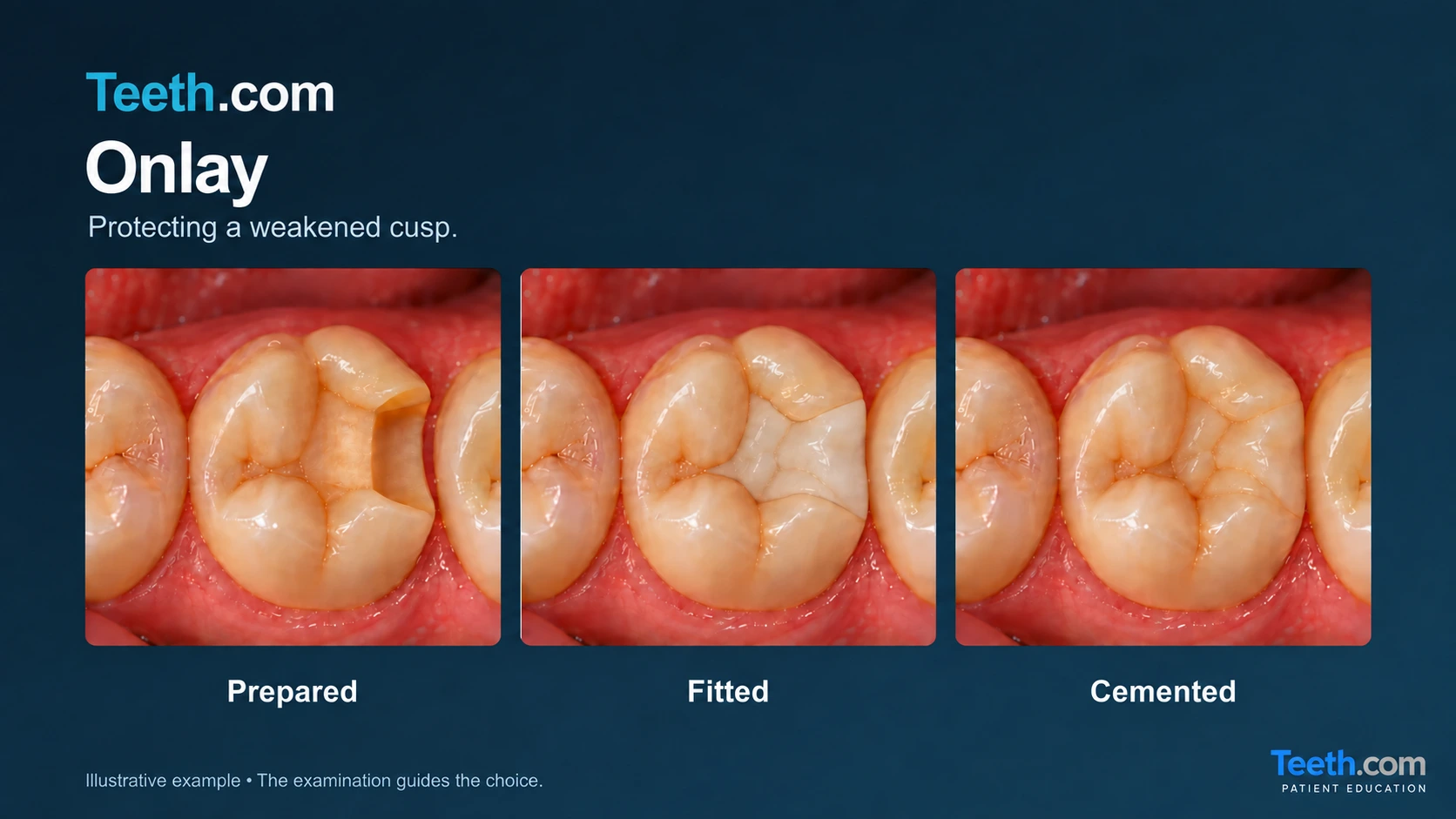
Onlay: covers one or more cusps
An onlay extends over one or more chewing points to replace or protect weakened parts. It covers part of the tooth rather than surrounding it like a full crown.
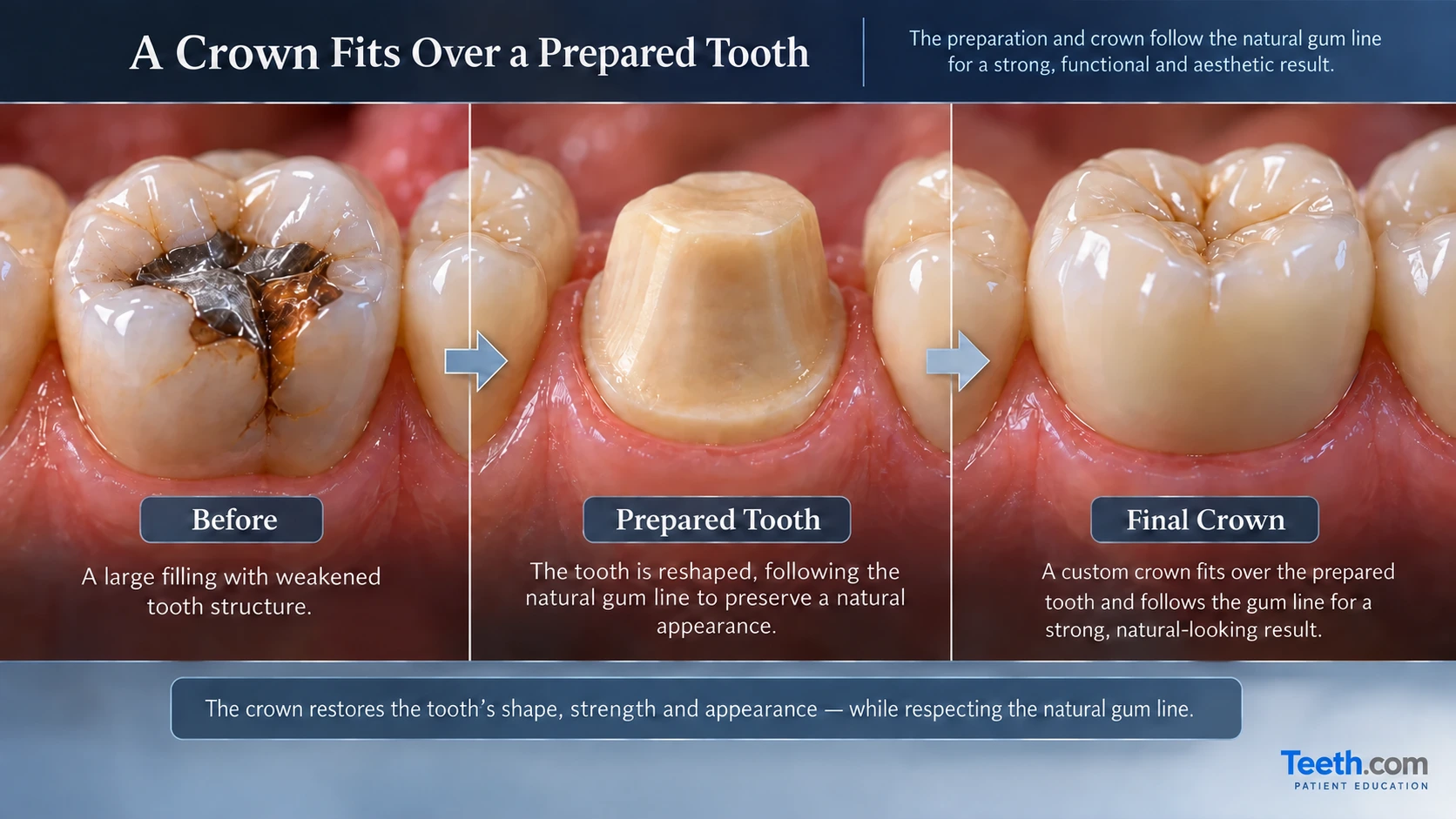
Crown: covers the chewing surface and sides
A crown fits over a prepared tooth. It provides broader coverage, but making room requires reshaping the chewing surface and sides. The preparation and final edge depend on the individual tooth.
What usually happens
The sequence and number of visits depend on the individual case.
Compare the coverage
The dentist checks for decay, cracks and weakened areas, assesses the strong tooth remaining and the bite, then discusses whether a filling, inlay, onlay or crown is appropriate.
Prepare and record
Decay and damaged areas are treated, and the tooth is shaped for the chosen restoration. A scan or impression records the preparation.
Make the restoration
A laboratory or in-office system makes the restoration. Materials and the need for a temporary depend on the plan.
Fit and secure
The dentist checks the fit, nearby contacts and bite, then bonds or cements it in place.
Benefits, limits & trade-offs
These restorations require preparation, and removed tooth structure does not grow back. Sensitivity, fracture, loosening or new decay can occur. More coverage is not automatically better: compare protection with preservation of sound tooth, alongside cost and ongoing care. A crown cannot guarantee that a crack will stop progressing.
Watch & explore further
Open the publisher’s page for videos, animations or more detailed reading.
External media opens only when you choose a link. Publishers may show advertisements or use cookies. Links do not imply endorsement or a partnership. Illustrations on Teeth.com are AI-generated, simplified explanations, not patient images.
Questions for your dentist
Ask your dentist to explain which coverage fits your tooth and why.
- Is there decay, a crack or another weakened area? Can you show me what needs treatment and how much strong tooth remains?
- Could an inlay or onlay provide enough protection, or is full crown coverage needed?
- How much natural tooth would each suitable option remove?
- Could a direct filling work instead, and how would its benefits and risks compare?
- Which material and fabrication method suit my bite, and will I need a temporary restoration?
- How do the costs, maintenance needs and consequences of waiting compare?
Take the next step
Look for offices offering this care
Search for crowns, inlays & onlays in your area, then confirm the service with the office.
Opening Google Maps shares your search terms with Google. Results and rankings come from Google. Teeth.com has not verified these offices, their equipment, training or availability. A listing is not a recommendation.
Before you book
- Confirm that the office offers the specific procedure or technology you want to discuss.
- Ask who performs the treatment and about their relevant training and experience.
- Discuss whether it suits your situation, alternatives, the total fee and follow-up care.