Teeth.com · Patient education
Tooth eruption chart
Look up the usual ages for upper and lower teeth. Each child’s timing can vary.
General dental education—not a diagnosis or personal treatment advice. A dentist who examines you can explain which options fit your situation. Educational limitations.
When do baby teeth come in and fall out?
| Tooth | Upper teeth | Lower teeth |
|---|---|---|
| Central incisorsFront teeth nearest the midline | 8–12 monthsLost: 6–7 years | 6–10 monthsLost: 6–7 years |
| Lateral incisorsImmediately beside the central incisors | 9–13 monthsLost: 7–8 years | 10–16 monthsLost: 7–8 years |
| CaninesAlso called cuspids; between the lateral incisors and first molars | 16–22 monthsLost: 10–12 years | 17–23 monthsLost: 9–12 years |
| First molarsImmediately behind the canines | 13–19 monthsLost: 9–11 years | 14–18 monthsLost: 9–11 years |
| Second molarsBehind the first molars; the last teeth in each baby-tooth arch | 25–33 monthsLost: 10–12 years | 23–31 monthsLost: 10–12 years |
Age ranges: ADA baby tooth chart (PDF). Each row applies to the matching tooth on both sides of the mouth.
When do permanent teeth come in?
| Tooth | Upper teeth | Lower teeth |
|---|---|---|
| Central incisorsFront teeth nearest the midline | 7–8 years | 6–7 years |
| Lateral incisorsImmediately beside the central incisors | 8–9 years | 7–8 years |
| CaninesAlso called cuspids; between the lateral incisors and first premolars | 11–12 years | 9–10 years |
| First premolarsAlso called first bicuspids; immediately behind the canines | 10–11 years | 10–12 years |
| Second premolarsAlso called second bicuspids; between the first premolars and first molars | 10–12 years | 11–12 years |
| First molarsImmediately behind the second premolars | 6–7 years | 6–7 years |
| Second molarsImmediately behind the first molars | 12–13 years | 11–13 years |
| Third molars (wisdom teeth)Behind the second molars, when present | 17–21 years | 17–21 years |
Age ranges: ADA permanent tooth chart (PDF).
Milestones: ADA: teething · NZDA: permanent teeth arriving
These ages are usual ranges, not deadlines. Children develop at different speeds. “Eruption” means a tooth coming through the gum; “shedding” means a baby tooth falling out.
The whole sequence
How teeth develop, from before birth to adulthood
See the full chart, or choose a life stage for a larger view. Read down each column, then continue to the right.
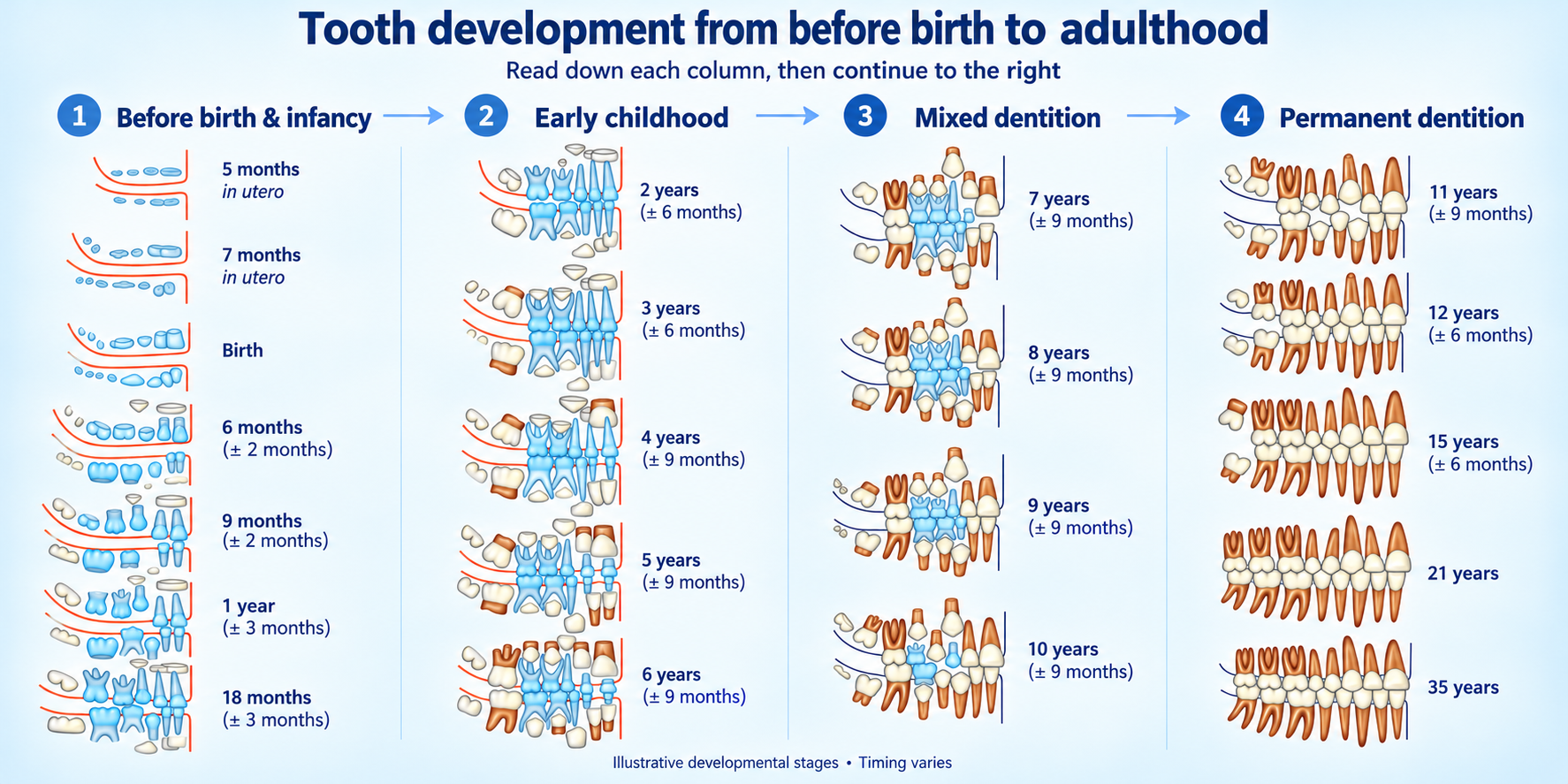
Blue: baby teeth. Ivory crowns and tan roots: permanent teeth. These AI-assisted illustrations show approximate developmental snapshots, including teeth still inside the jaws. The ages are not deadlines; see the baby teeth age table or permanent teeth age table for the usual ranges.
Chart stages in text
Before birth & infancy
The earliest panels show teeth forming before they appear in the mouth. Later panels follow the first baby teeth as they come through the gums.
- 5 months in utero
- 7 months in utero
- Birth
- 6 months (± 2 months)
- 9 months (± 2 months)
- 1 year (± 3 months)
- 18 months (± 3 months)
Early childhood
Baby teeth are in use while their permanent replacements develop. Permanent molars form farther back; they do not replace baby teeth.
- 2 years (± 6 months)
- 3 years (± 6 months)
- 4 years (± 9 months)
- 5 years (± 9 months)
- 6 years (± 9 months)
Mixed dentition
Baby and permanent teeth share the mouth. As baby teeth are lost, their replacements emerge; developing teeth remain visible within the jaws in the diagram.
- 7 years (± 9 months)
- 8 years (± 9 months)
- 9 years (± 9 months)
- 10 years (± 9 months)
Permanent dentition
The later panels follow the permanent teeth and their roots into adulthood. Wisdom-tooth development, eruption and presence vary.
- 11 years (± 9 months)
- 12 years (± 6 months)
- 15 years (± 6 months)
- 21 years
- 35 years
Development and eruption references: AAPD: dental growth and development · ADA: eruption charts.
Find a tooth on the diagrams
Baby teeth are also called primary, milk, or deciduous teeth. The lower central incisors—the front teeth nearest the midline—often arrive first. Many baby teeth stay in place until the later elementary-school years.
Find a baby tooth by name
The complete set has 20 baby teeth: 10 upper and 10 lower. Choose a name to see the matching teeth outlined in both views.
Central incisorsFront teeth nearest the midline
Usually arrive: Upper 8–12 months · Lower 6–10 months
Usually fall out: Upper 6–7 years · Lower 6–7 years
Upper baby teeth
10 teethLower baby teeth
10 teethViews of the biting surfaces. Baby teeth include incisors, canines and molars—there are no baby premolars. AI-created teaching illustration; tooth shapes and spacing vary.
Tooth names and age ranges: ADA primary tooth development chart (PDF). Letters: ADA Universal Tooth Designation System (PDF).
The complete adult arches
Realistic views of the biting surfaces, with optional U.S. Universal tooth numbers. Your right side appears on the left of each image.
Central incisorsFront teeth nearest the midline
Usual arrival: Upper 7–8 yearsLower 6–7 years
Upper arch · maxilla
#1–16Lower arch · mandible
#17–32All 32 adult teeth are shown, including the wisdom teeth: #1, #16, #17 and #32. Not everyone develops all four wisdom teeth, and some remain below the gum. AI-created anatomy with separately placed, checked number labels.
Numbering: ADA Universal Tooth Designation System (PDF).
See it explained
Two ways adult teeth arrive
Some permanent teeth replace baby teeth. Others arrive farther back, without a baby tooth falling out first.
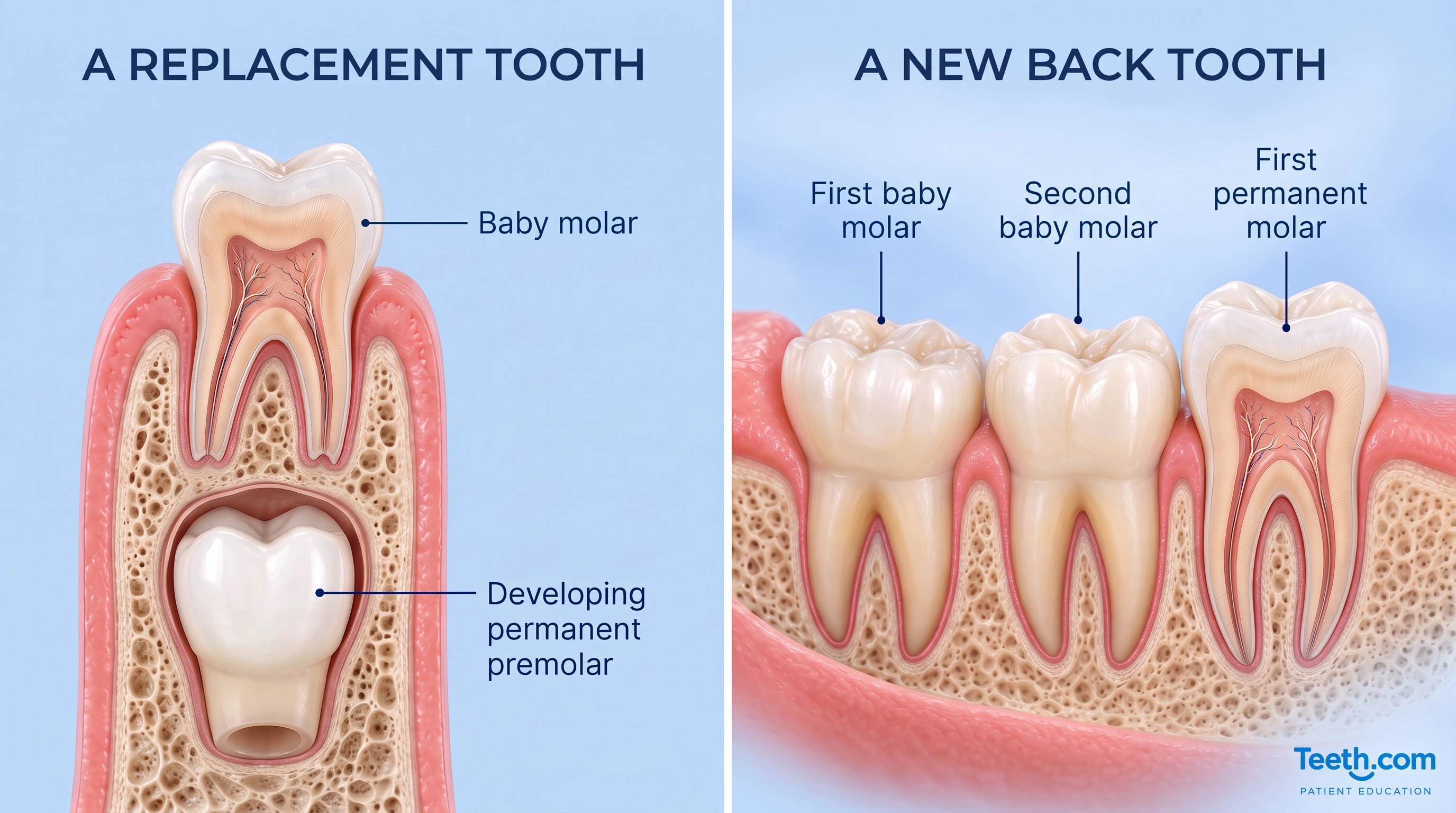
Replacing a baby tooth
A premolar develops below a baby molar. The baby tooth’s roots gradually shorten as the permanent replacement approaches.
Adding a back tooth
The first permanent molar grows behind the baby molars. It does not replace a baby tooth.
Further reading: NZDA: mixed dentition.
Take a closer look
See a real photo and X-ray of developing teeth
These are two different children. The photo shows teeth already in the mouth; the X-ray shows developing teeth beneath the gum.
Baby and adult teeth together
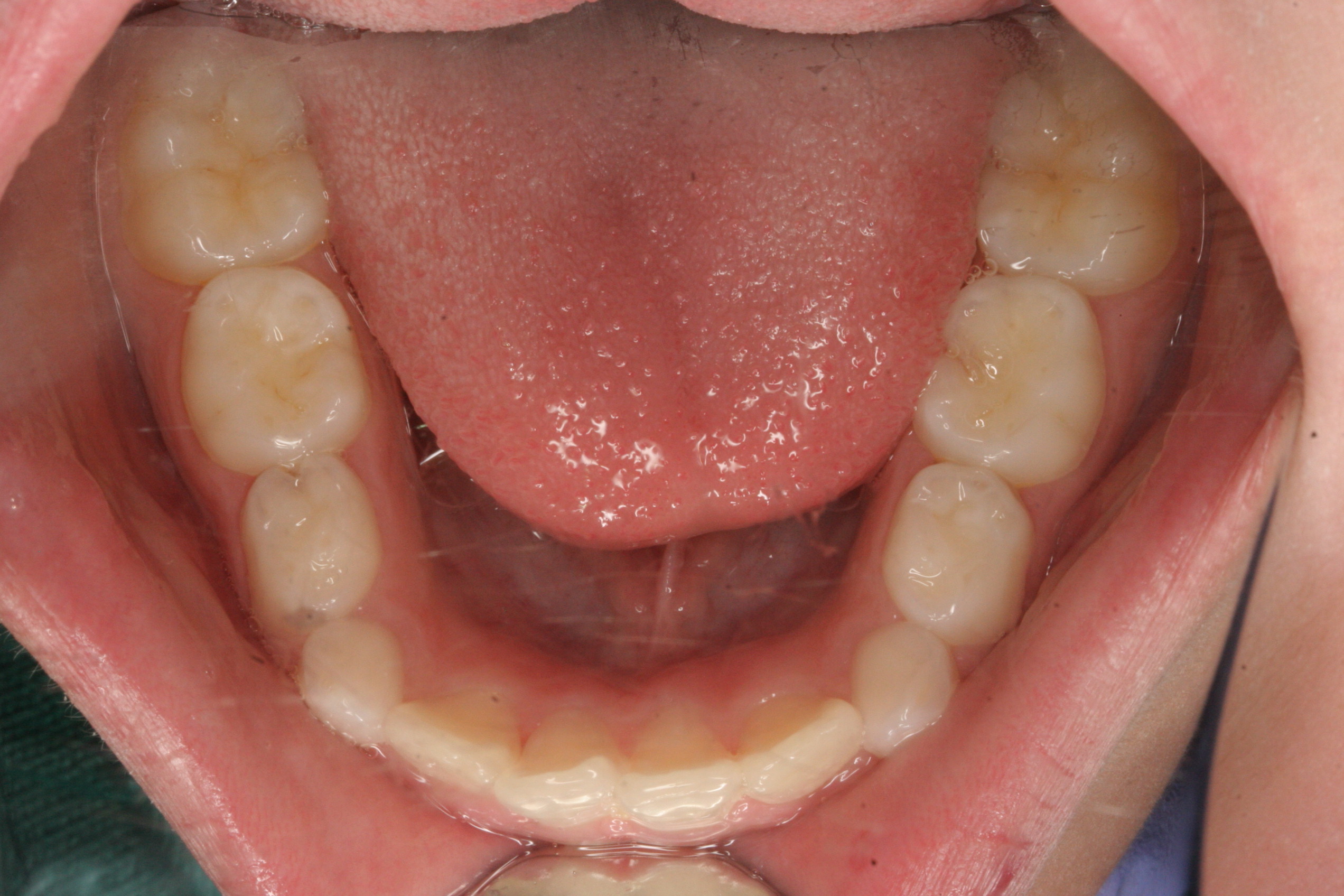
What to look forFind the large last tooth on each side, near the top of the picture. These are permanent molars behind the smaller baby molars.
The source describes a child about 8½ years old. This illustrates the two sets together; it is not a picture of perfect dental health or a timetable for another child.
Source & image credit
Roquex, MixedDentition.jpg (2017). View source ↗ · CC0 1.0.
Original photograph; displayed at reduced size.
Open original image ↗Primary teeth and their successors
What to look forLook below the two baby molars: the rounded white shapes are the crowns of the developing premolars that will replace them.
A focused view of one nine-year-old’s lower jaw. This is one stage of development, not a reason for every child to have an X-ray.
Source & image credit
Coronation Dental Specialty Group. View source ↗ · CC BY 3.0.
Focused view of the original panoramic image; source uploader adjusted exposure in 2013. No further tonal or anatomical alteration.
Open original image ↗Questions parents ask
My child’s teeth don’t match the chart. What should I do?
A chart alone cannot tell whether development is normal for your child. Raise timing or eruption concerns with their dentist, who can look at the whole pattern. Arrange the first dental visit when the first tooth appears, and no later than the first birthday—even if no teeth have appeared yet. AAPD: first dental visit
When do children start losing baby teeth?
The primary central incisors commonly fall out at 6–7 years. Other baby teeth fall out later. See the baby teeth age table for each tooth’s usual range. ADA: baby teeth and shedding ages
Is a fever just teething?
Do not assume fever, diarrhea, or a rash is caused by teething. Contact your child’s pediatrician about those symptoms. ADA: teething symptoms
Brushing, toothpaste and first visits →Prepare questions for your dentist →