Dental conversation guide
Dentistry for kids: building healthy habits
Start a conversation about healthy dental habits.
A first dental visit is a chance to check your child’s teeth and development and talk about daily care. The American Dental Association recommends a visit after the first tooth appears, no later than the first birthday. ADA: First dental visit
Everyday questions, practical answers
Helping children care for their teeth
How can I help my child brush their teeth?
Start when the first tooth appears and help your child brush twice daily. Under age 3, use a rice-grain smear of fluoride toothpaste; ages 3 to 6 need no more than a pea-sized amount. Help or supervise until they can clean thoroughly—NHS guidance says at least age 7. Encourage spitting rather than swallowing toothpaste.
When should I start flossing my child’s teeth?
Begin daily cleaning between teeth when two teeth touch. An adult will need to help at first. Keep helping until your child can handle the tool and clean the spaces gently and thoroughly.
Can children use mouthwash?
Children younger than 6 should not use mouthwash unless their dentist directs it, because they may swallow it. For older children, check the product’s age limits and directions and ask whether they need it. Mouthwash does not replace brushing or cleaning between teeth.
- ADA: Mouthrinse (Mouthwash) · 2026-08-07
Help your child brush twice a day with fluoride toothpaste. For children younger than 3, use no more than a rice-grain-sized smear; for ages 3 to 6, use a pea-sized amount. Supervise brushing and help your child avoid swallowing toothpaste. Your dental team can show you how to care for your child’s teeth as they grow. ADA: Healthy habits
See it explained
Two ways adult teeth arrive
Some permanent teeth replace baby teeth. Others arrive farther back, without a baby tooth falling out first.
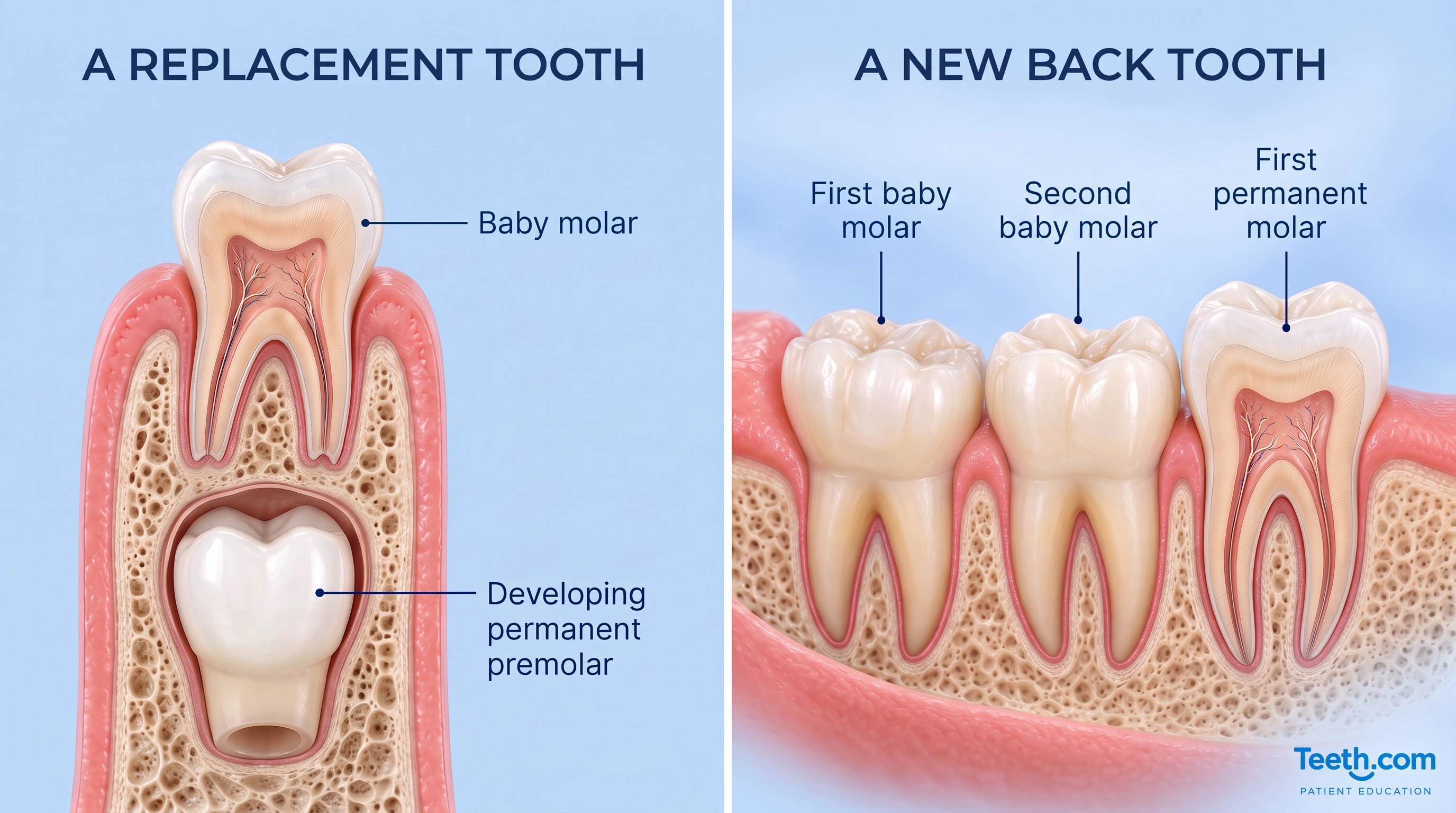
Replacing a baby tooth
A premolar develops below a baby molar. The baby tooth’s roots gradually shorten as the permanent replacement approaches.
Adding a back tooth
The first permanent molar grows behind the baby molars. It does not replace a baby tooth.
Further reading: NZDA: mixed dentition.
Take a closer look
See a real photo and X-ray of developing teeth
These are two different children. The photo shows teeth already in the mouth; the X-ray shows developing teeth beneath the gum.
Baby and adult teeth together
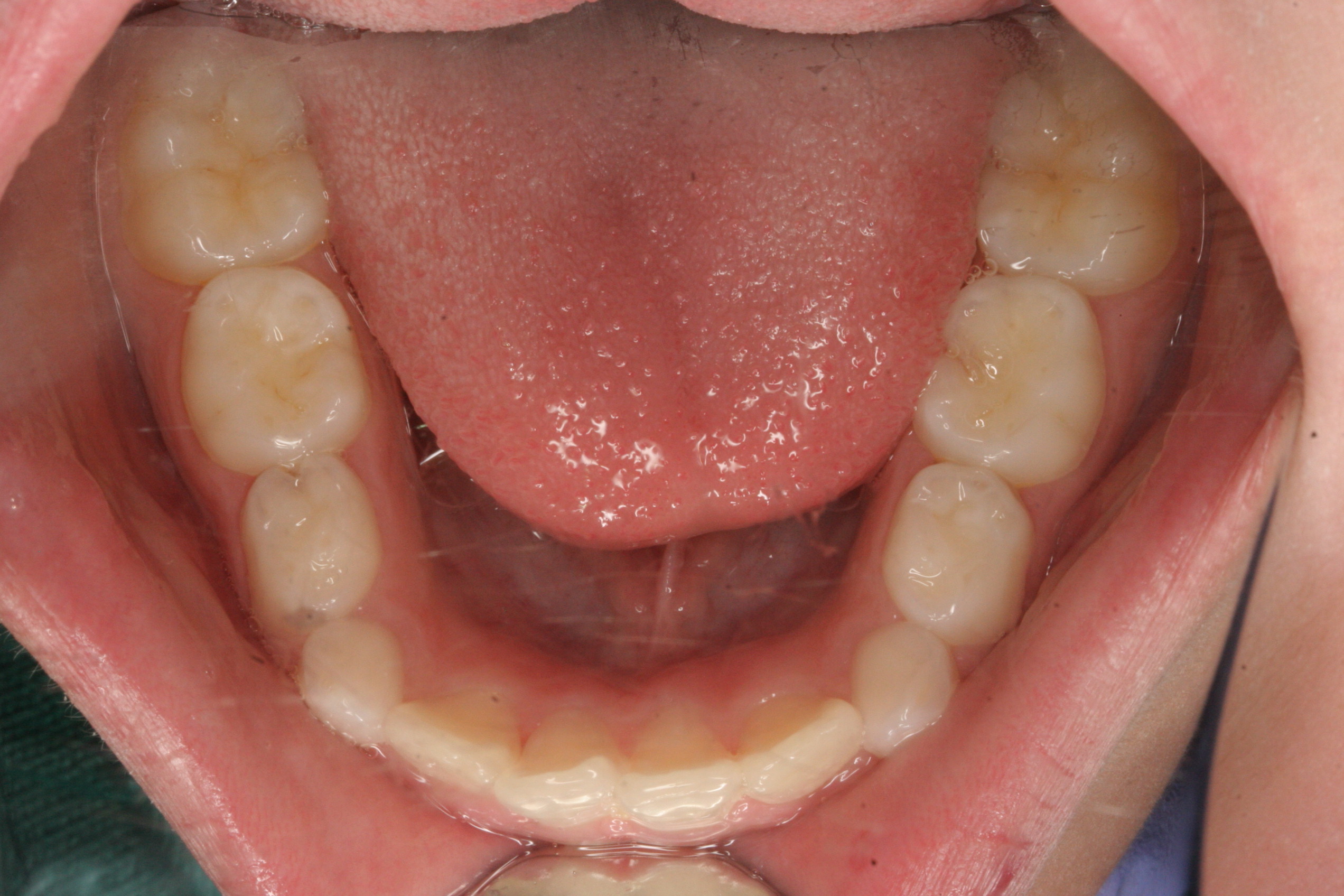
What to look forFind the large last tooth on each side, near the top of the picture. These are permanent molars behind the smaller baby molars.
The source describes a child about 8½ years old. This illustrates the two sets together; it is not a picture of perfect dental health or a timetable for another child.
Source & image credit
Roquex, MixedDentition.jpg (2017). View source ↗ · CC0 1.0.
Original photograph; displayed at reduced size.
Open original image ↗Primary teeth and their successors
What to look forLook below the two baby molars: the rounded white shapes are the crowns of the developing premolars that will replace them.
A focused view of one nine-year-old’s lower jaw. This is one stage of development, not a reason for every child to have an X-ray.
Source & image credit
Coronation Dental Specialty Group. View source ↗ · CC BY 3.0.
Focused view of the original panoramic image; source uploader adjusted exposure in 2013. No further tonal or anatomical alteration.
Open original image ↗Questions to ask your child’s dentist:
How can we make dental visits comfortable for my child?
What brushing and dental-care routine suits their age?
What should we discuss at their next checkup?
General education only. Your child’s dentist can give guidance based on their age, development, and individual needs.