Inflamed gums
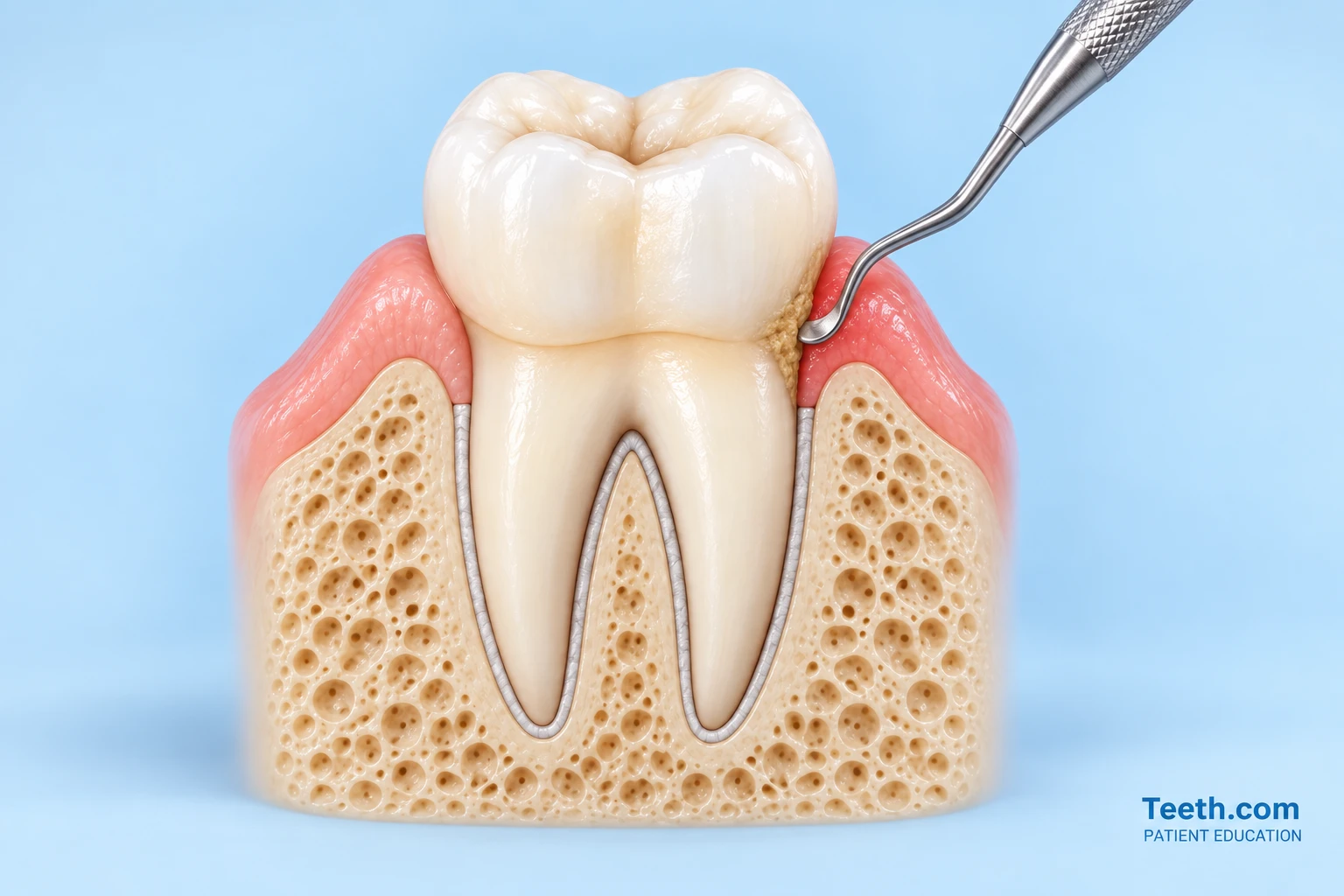
Plaque is a sticky film of bacteria. Buildup near the gumline can irritate the gums and cause gingivitis. A dental check distinguishes this from disease affecting the supporting tissues.
Your teeth & gums · An explanation in under a minute
What it can mean—and what to do next.
You brush every day. So why are your gums bleeding? Plaque is a film of bacteria. At the gumline, it can trigger inflammation, so gums bleed more easily. Gingivitis inflames gums without itself destroying attachment or bone. Periodontitis damages that deeper support. Your dentist or hygienist measures from the gum edge to the base of the space beside the tooth. Depth alone is not a diagnosis. Bleeding, attachment measurements, health history, and X-rays when needed complete the picture. Those findings guide your cleaning, treatment and follow-up. Brush gently and clean between teeth daily. Get recurring bleeding checked; medicines and other conditions can also contribute.
Plaque is a sticky film of bacteria. Buildup near the gumline can irritate the gums and cause gingivitis. A dental check distinguishes this from disease affecting the supporting tissues.
Brushing too hard can irritate gums. Bleeding can also happen when you start cleaning between your teeth. Keep cleaning gently and discuss bleeding that persists.
Pregnancy-related changes and medicines such as blood thinners can contribute. Tell your dentist about your health and medicines; don’t stop a prescribed medicine on your own.
Further reading: American Dental Association: bleeding gums.
Your next step
At your appointment
The examination puts the bleeding in context. Your dentist may check:
A related question
Not necessarily. Treatment depends on what the examination finds. Our longer video explains the measurements, treatment and follow-up.
Watch the deep-cleaning guideSources checked October 17, 2026. Video uses a fictional AI-generated patient, realistic dental illustrations, animation and generated narration. Production credits.