Dental conversation guide
Everyday dental care: a routine you can maintain
Explore the basics with your dental professional.
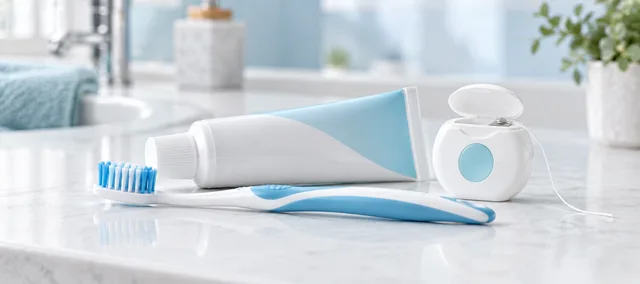
Brush twice daily with fluoride toothpaste and a soft-bristled toothbrush that reaches comfortably around your mouth. Use gentle strokes to clean the outer, inner, and chewing surfaces. Replace a worn brush when the bristles fray, or about every three to four months. Regular dental visits and limiting sugary snacks and drinks are also part of everyday care. ADA: Brushing your teeth
Everyday questions, practical answers
Your daily dental-care questions
How much toothpaste should adults and children use?
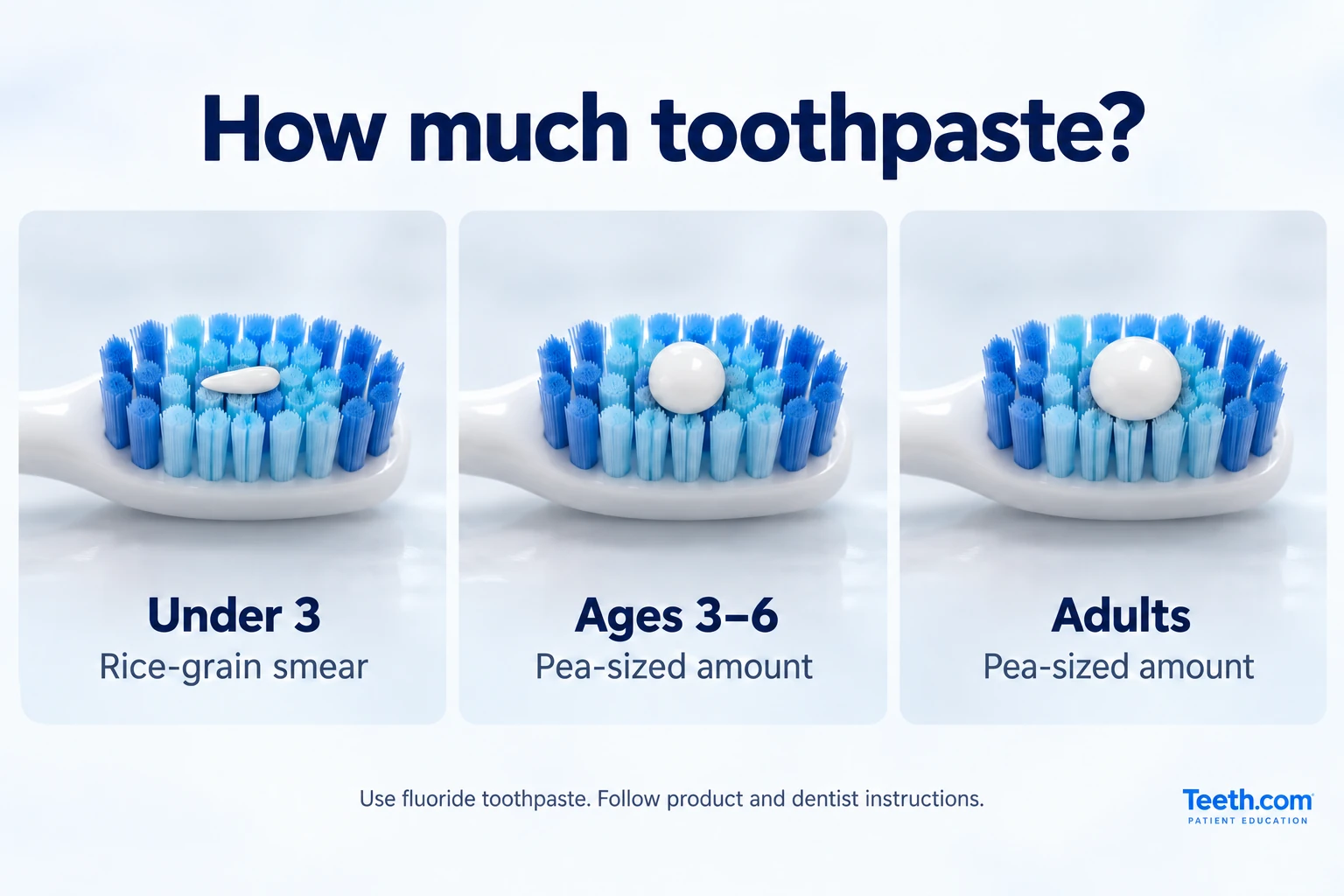
Adults: a pea-sized amount of fluoride toothpaste is a practical guide, supported by NHS adult-care advice. Follow the product directions and your dentist’s instructions, especially for prescription toothpaste. For children under 3, use a rice-grain-sized smear from the first tooth. For ages 3 to 6, use no more than a pea-sized amount. Older children and teenagers should use fluoride toothpaste according to the label and their dentist’s advice. Supervise children and encourage spitting rather than swallowing toothpaste.
- Wirral NHS: Oral health care for adults · 2025-08-21
- ADA: Toothpastes · 2026-02-11
- AAPD: Fluoride Therapy (2025 Reference Manual; revised 2023) · 2023
Which fluoride toothpaste should I choose?
Choose a fluoride toothpaste suited to your age and needs. In the US, the ADA Seal identifies toothpastes evaluated for cavity prevention. Regular ADA-accepted fluoride toothpastes contain at least 1,000 and less than 1,500 parts per million (ppm) fluoride. Higher-strength prescription toothpaste needs individual instructions from a dentist; do not give it to a child simply because an adult uses it.
- ADA: Toothpastes · 2026-02-11
- AAPD: Fluoride Therapy (2025 Reference Manual; revised 2023) · 2023
How long and how often should I brush?
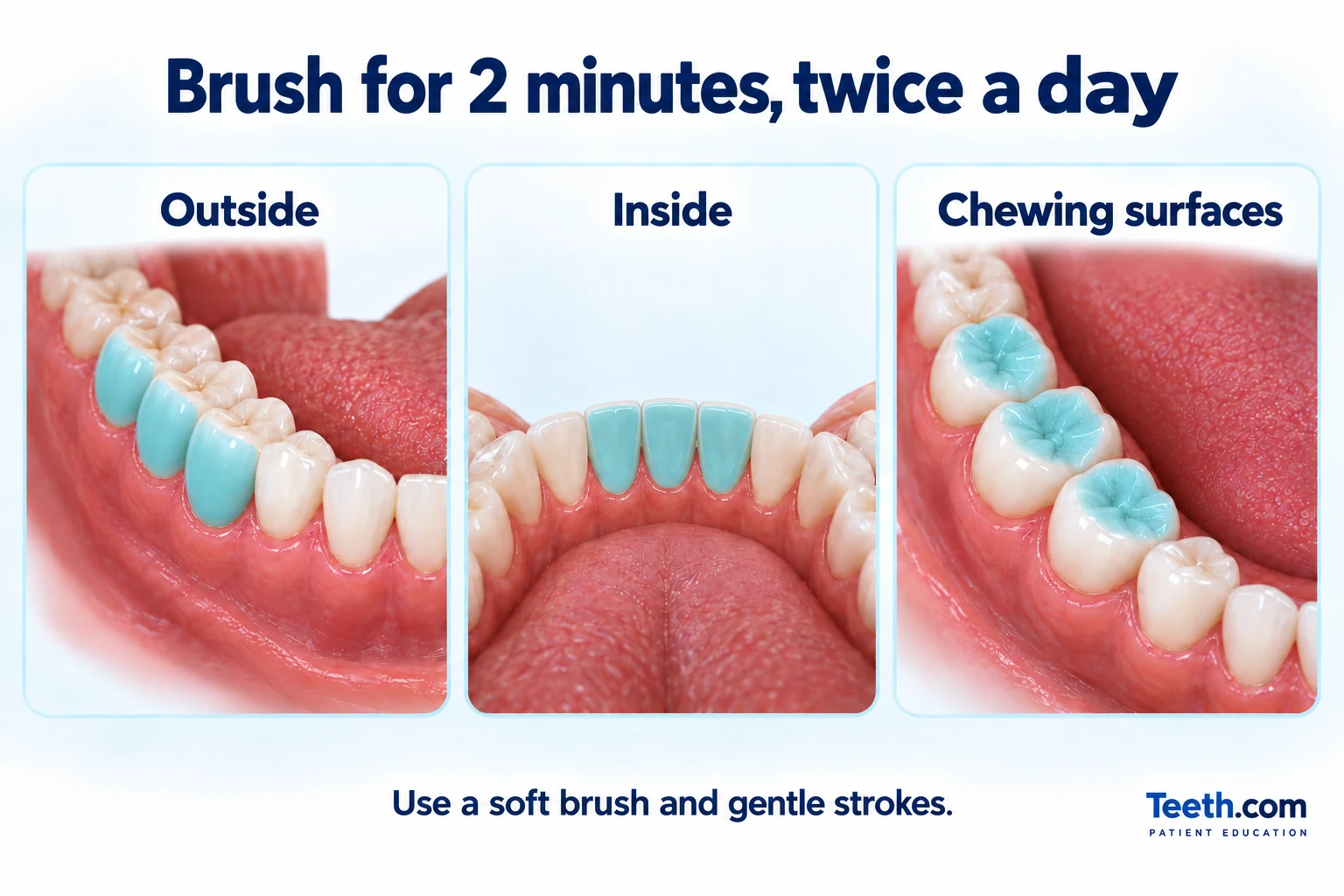
Brush for two minutes, twice a day, with fluoride toothpaste. Include a brushing before bed and another during the day. Spend time on the inside, outside and chewing surfaces rather than repeatedly brushing only the front teeth.
How do I brush my teeth properly?
Use a soft-bristled brush that fits comfortably in your mouth. With a manual brush, clean gently along the gumline and over every tooth surface. An electric brush can also work well; follow its instructions rather than assuming it needs the same motion as a manual brush.
- Angle a manual brush about 45 degrees toward the gumline. Move it in gentle, short strokes about a tooth wide.
- Work around the outside and inside surfaces, then the chewing surfaces. Avoid hard scrubbing.
- For the inner surfaces of the front teeth, hold the brush upright and make gentle up-and-down strokes.
- Replace the brush when its bristles fray, or about every three to four months.
Should I rinse my mouth after brushing?
Spit out the extra toothpaste and avoid rinsing immediately with water. Leaving the remaining fluoride on the teeth helps it keep working. Do not swallow toothpaste. If your dentist has prescribed a particular product or routine, follow those instructions.
How often should I floss, and how do I do it?
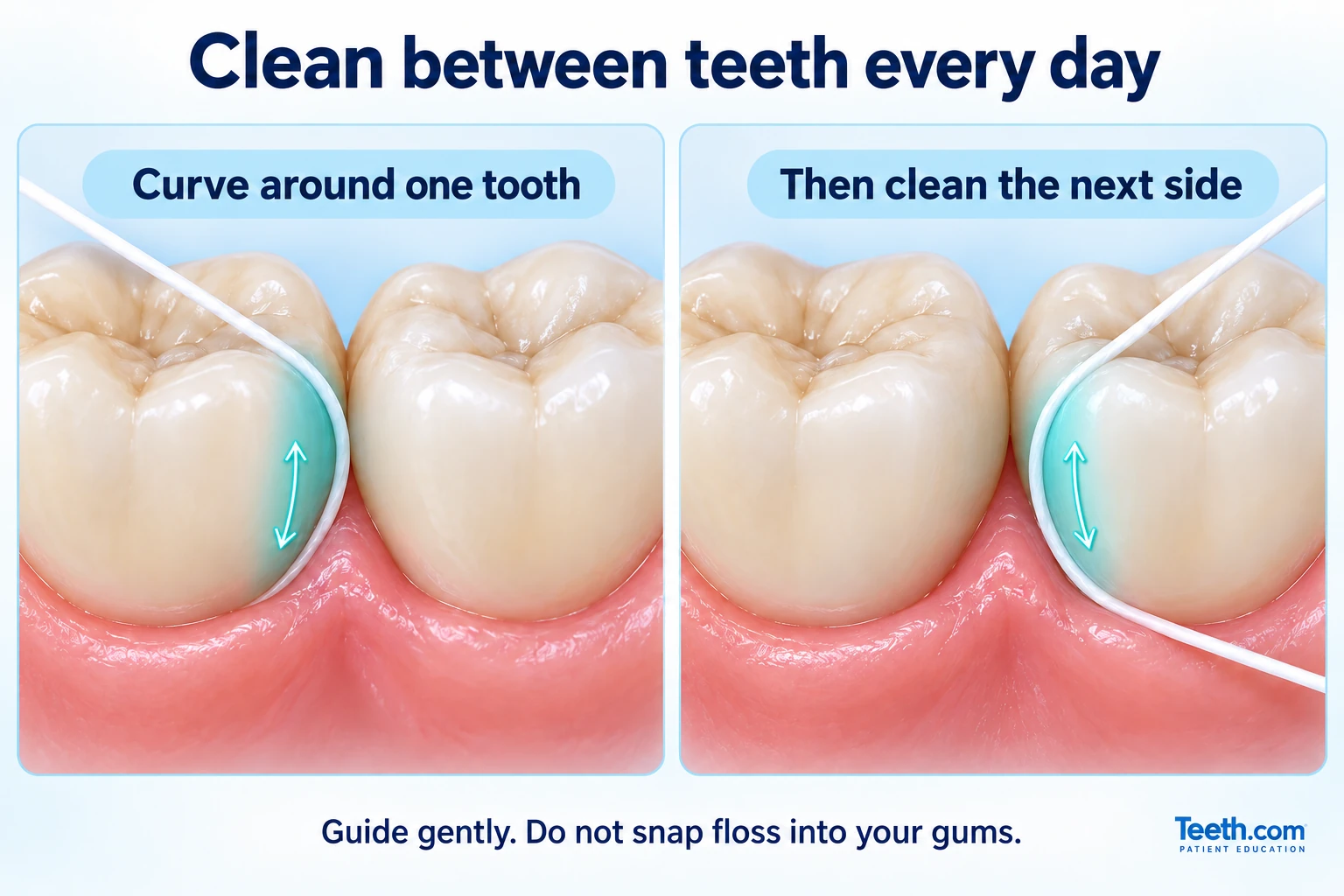
Clean between your teeth once a day. With floss, gently clean both tooth surfaces beside each gap. Doing it thoroughly matters more than whether you floss before or after brushing.
- Use about 18 inches of floss and hold a short section between your fingers.
- Ease it between two teeth without snapping it into the gum.
- Curve it into a C against one tooth and gently move it up and down its side, just beneath the gum edge.
- Repeat against the neighboring tooth. Continue around the mouth, including behind the last teeth.
What if string floss is difficult to use?
An interdental brush, floss holder or water flosser may be easier. Ask your dental team which tool fits your spaces and dental work, and how to use it gently. Do not force a brush into a tight gap. Persistent pain while cleaning needs dental advice.
Do I need mouthwash, and when should I use it?
Mouthwash is an optional addition for some people, not a replacement for brushing and cleaning between teeth. A fluoride rinse can help prevent cavities. Use the amount and rinsing time on its label, then spit it out. NHS guidance suggests using routine fluoride mouthwash at a different time from brushing, and avoiding food or drink for 30 minutes afterward. Follow any different product or prescription instructions.
- ADA: Mouthrinse (Mouthwash) · 2026-08-07
- NHS: How to keep your teeth clean · 2025-06-30
Clean between your teeth every day, where a toothbrush cannot reach well. Floss, interdental brushes, or a water flosser may help, depending on your needs and dental work. Ask your dental team to demonstrate a technique and help choose a tool you can use comfortably. If cleaning between your teeth continues to hurt, discuss it with your dentist. ADA: Cleaning between teeth
See it explained
A closer look at a filling
A tooth-colored filling replaces a damaged area while leaving the surrounding tooth in place.
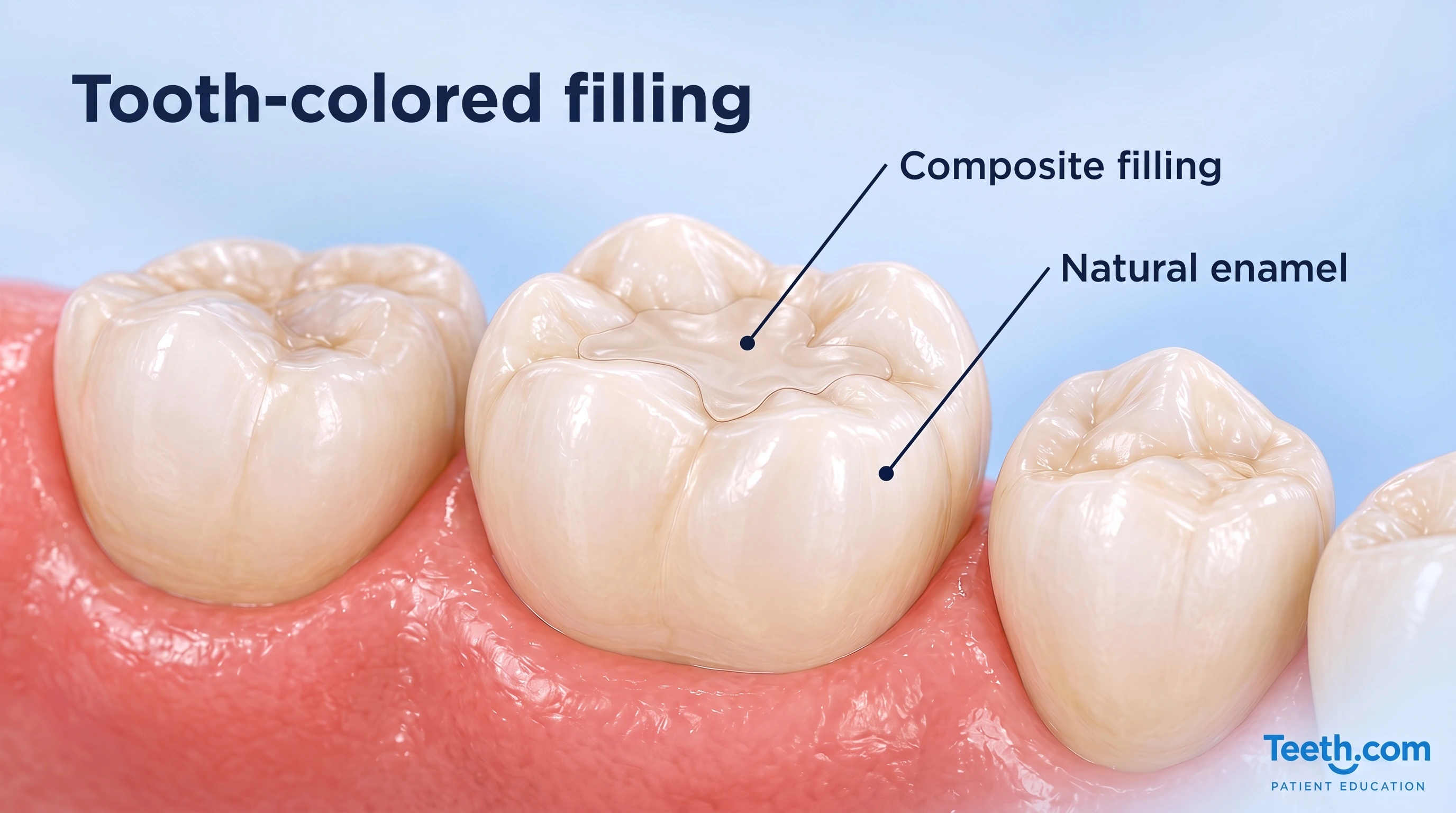
Look for the outline
Tooth-colored material can blend in. The edge of the restoration helps show where it meets the remaining tooth.
Look beyond the surface
The amount and condition of the remaining tooth help your dentist discuss whether a filling or another restoration fits the situation.
Further reading: NIDCR: tooth decay and fillings.
Take a closer look
See the layers of a tooth on a real X-ray
Use this example to recognize the main layers. It is not an example of a cavity or a test for whether you need a filling.
Enamel on a dental X-ray
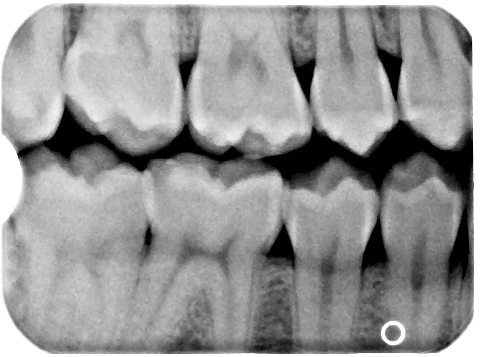
What to look forThe bright outer layer over each chewing surface is enamel. The grayer layer inside is dentin, surrounding the darker pulp space.
A bitewing shows portions of the upper and lower back teeth. Cells and microscopic details are too small to see on this image.
Source & image credit
Dr Jeffrey Cross DDS, via Wikimedia Commons (2014). View source ↗ · CC BY-SA 3.0.
Original radiograph unchanged; displayed at reduced size. No teaching markers have been added to this view.
Open original image ↗Questions to ask your dentist:
How can I improve my daily dental-care routine?
Which tools or products would suit my needs?
How often should I visit based on my individual situation?
General education only. Your dental professional can adapt your routine and visit schedule to your teeth, gums, and health needs. For young children, see our Dentistry for Kids guide.