Dental conversation guide
Teeth whitening: what to know before you start
Prepare questions about a brighter smile.
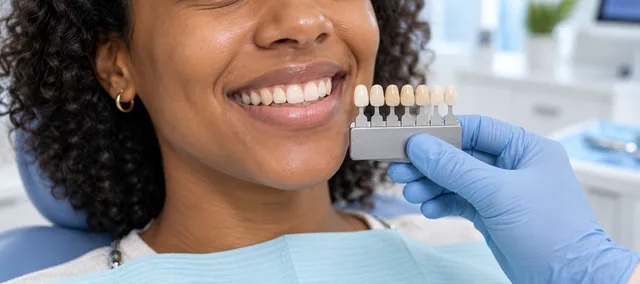
Whitening toothpastes help remove surface stains, while bleaching products can lighten natural teeth. Options include treatment in a dental office, dentist-provided home trays, and over-the-counter products. Results depend on the cause of the discoloration. Whitening does not change the color of crowns, veneers, or fillings, so existing dental work may no longer match. ADA: Whitening options
Watch the explanation
What actually makes teeth whiter?
See how peroxide works, compare methods, and understand the limits.
AI-assisted presenter and visuals · Simplified chemistry animation · Captions included · General education.
General dental education only—not a diagnosis or personal treatment recommendation. AI-generated presenters are illustrative characters, not clinicians providing care. This video does not replace an examination or create a dentist–patient relationship. Do not delay professional care because of a video. Educational limitations.
Read the whitening video transcript
Why do my teeth look more yellow even though I brush? Coffee and tea can leave stains on the surface of your teeth. Whitening toothpaste can help polish away surface stains. As enamel thins with age, more of the naturally yellow dentin underneath can show through.
Peroxide whitening works differently. Peroxide passes into enamel and dentin. Peroxide changes some of the molecules that give a stain its color. They absorb less visible light, so the stain looks lighter. That's oxidation.
Strips sit directly on your teeth. Your dentist can fit a tray for you to use at home. In the office, the dental team protects your gums and applies the gel.
Suitability varies with tooth condition, sensitivity and the intended result. Whitening can lighten natural teeth, but fillings, crowns, and veneers won't whiten to match. Results vary.
Sensitivity and irritated gums can happen. Follow the instructions and stop and contact your dentist if discomfort persists or worsens.
Ask your dentist: What’s causing my discoloration, and which parts of my smile would change with whitening?
Source: American Dental Association: Whitening · Carey: tooth-whitening chemistry.
Talk with your dentist before starting so you can discuss suitable options and realistic results. Some people develop temporary tooth sensitivity. Overusing whitening products can harm teeth or gums, so follow the directions and discuss discomfort with your dentist rather than increasing the amount or frequency yourself. ADA: Whitening and sensitivity
How does whitening actually work?
Surface stain removal
Cleaning and polishing remove deposits on the outside of enamel—for example, stains associated with tea, coffee or tobacco. This is different from changing color within the tooth.
Bleaching within the tooth
Hydrogen peroxide passes into enamel and dentin. Reactive oxygen products change the colored molecules there through oxidation, making them less visibly colored. Carbamide peroxide releases hydrogen peroxide.
Bleaching changes color chemically; it does not add a white coating. The cause of discoloration affects the response. Developmental changes, aging, medicines and injury can produce different kinds of discoloration.
Which type does what?
Compare the approach, the supervision and the limitations—not just the word “whitening” on the package.
Source: ADA MouthHealthy: whitening options.
Does an LED light or laser make it better?
Light is an accessory to bleaching, not a substitute for the bleaching agent. The Canadian Dental Association reports that light-assisted treatment does not necessarily produce a whiter final result. Ask what added benefit the particular system offers, rather than assuming a light makes it superior.
Source: Canadian Dental Association: light-assisted bleaching.
Benefits, risks and who should check first
What it can improve
Whitening can improve the appearance of discolored natural teeth. The goal is a suitable lighter shade; the amount of change varies. Home treatment takes longer than office treatment, but speed alone does not establish a better final result.
What it cannot change
Crowns, veneers and tooth-colored fillings do not bleach like natural teeth. A visible mismatch may remain. Yellow discoloration often responds better than some brown or gray discoloration; a specific shade is not guaranteed.
Source: Healthdirect: benefits and treatment expectations.
Source: ADA MouthHealthy: limits and restorations.
Sensitivity and irritated gums
Temporary sensitivity and soft-tissue irritation are common short-term effects. If symptoms persist, worsen or other side effects occur, stop using the product and contact your dentist. Repeated or excessive bleaching is not risk-free. Do not increase strength, wear time or frequency yourself to chase a whiter shade.
Source: Canadian Dental Association: adverse effects and repeated bleaching.
Have dental problems assessed before bleaching
Tell your dentist about existing sensitivity, cracks, cavities, gum problems and previous dental work. These can affect whether whitening is suitable. Strong gels can burn soft tissues; swallowing gel can irritate the stomach. Use only an appropriate dental product as directed.
Source: Healthdirect: preparation and complications.
Elective bleaching should be deferred during pregnancy because it has not been adequately studied in pregnant people. Discuss timing with your dentist.
Source: Canadian Dental Association: pregnancy.
For children and teenagers, seek individual dental advice. Full-arch cosmetic bleaching is discouraged while baby teeth or a mixed set of baby and adult teeth are present.
Source: ADA: patient and dentition considerations.
What if just one tooth is darker?
Have the cause assessed before trying to match it with strips. A root-canal-treated tooth may sometimes be treated with internal bleaching, where a dentist places material inside the tooth. This is a separate professional procedure, not a home-whitening technique.
Source: Healthdirect: internal bleaching.
Internal bleaching also has distinct risks, including uncommon external cervical root resorption—loss of tooth structure near the neck of the tooth.
Source: ADA: non-vital bleaching risks.
What should I expect afterward?
Results are not permanent. Starting color, the method and future exposure to stains affect how long the change lasts. Discuss maintenance and whether any further bleaching is appropriate instead of automatically repeating courses.
Source: Canadian Dental Association: duration and maintenance.
Skip the DIY shortcuts
Lemon juice and vinegar can erode enamel. Rough scrubs can wear it away; charcoal and oil pulling are not established substitutes for effective whitening. “Natural” does not mean harmless. Brushing, cleaning between teeth, avoiding tobacco and dental checkups remain useful habits whatever shade you choose.
Questions to ask your dentist:
What is causing the discoloration?
Which whitening options would suit my teeth and existing dental work?
What should I ask about sensitivity and maintaining results?
General education only. A dentist can assess discoloration, existing dental work, and whether whitening is appropriate for you.