Replace teeth
Dental Implants
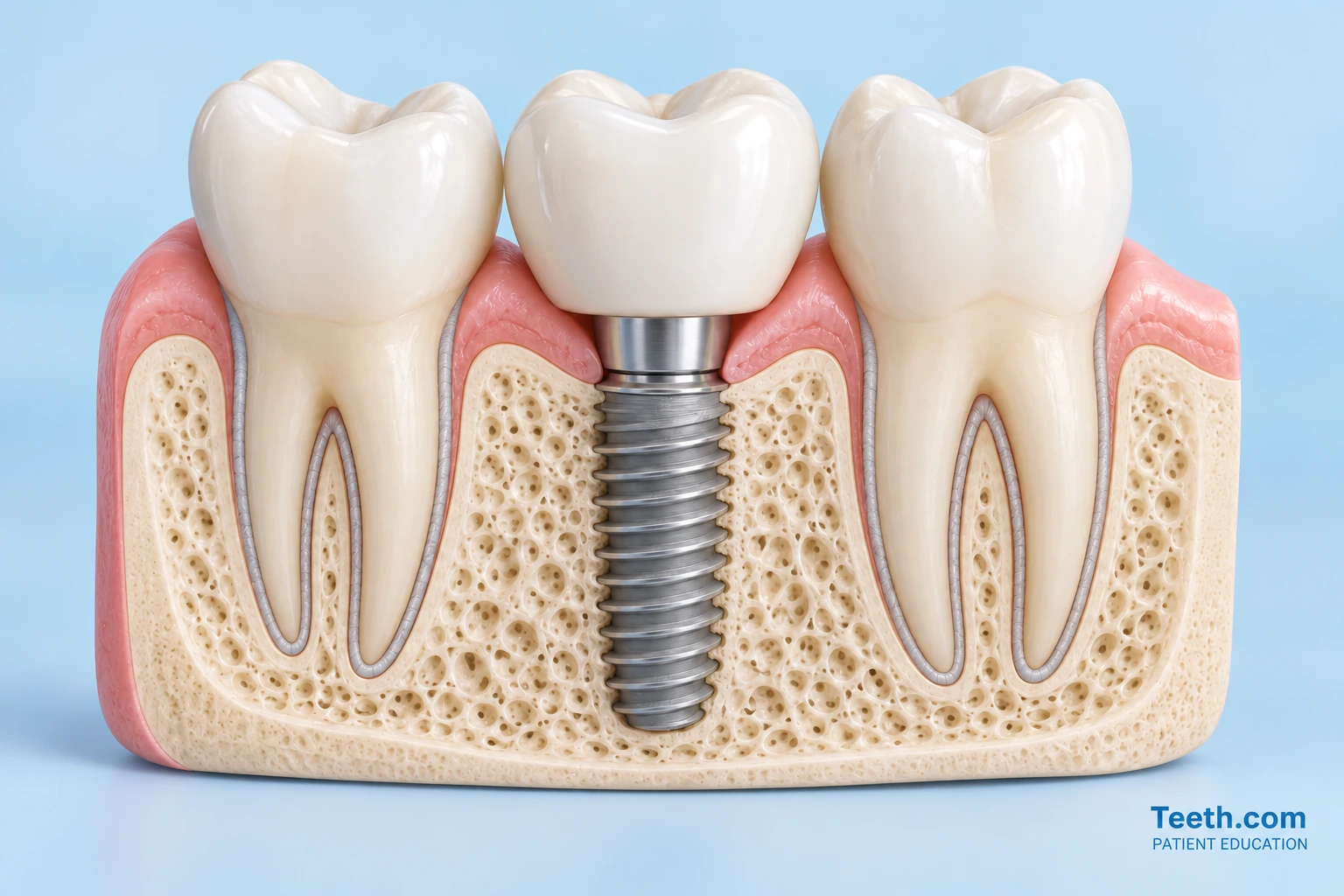
Understand the implant, the connecting abutment and the replacement tooth.
What it does
An implant supports a crown, bridge or denture. The implant body sits in the jaw; an abutment connects it to the restoration above the gum. Planning considers your health, available bone and ability to keep the area clean.
Explore the source material ↗Watch the explanation
See the procedure in motion
How an implant replaces a tooth
Blue Sky Bio
Connects to YouTube when you choose to load.How an implant replaces a tooth
An animation of implant treatment, from the replacement root to the restored tooth.
Manufacturer animation. Healing stages are compressed; this is not a promise of immediate treatment.
If the player is unavailable, use the direct video link. Videos are external educational resources, not endorsements or personalized treatment advice. Publishers may include advertising; availability and captions vary. Loading connects to the video host and may share connection information or use cookies. Privacy notice.
What usually happens
The sequence and number of visits depend on the individual case.
Assess the site
The dental team examines the space, gums and bite and selects the imaging needed for planning.
Place the implant
The implant is placed surgically. Additional bone treatment may be needed in some cases.
Allow healing
Bone heals around the implant. This process can take several months; timing differs between patients.
Restore and maintain
The replacement tooth is attached, the bite is checked, and ongoing cleaning and follow-up are planned.
Benefits, limits & trade-offs
Surgery can involve infection, nerve or sinus injury, and failure to integrate. Smoking and uncontrolled disease may affect healing. A same-day temporary tooth is not the same as a fully healed final restoration.
Watch & explore further
Open the publisher’s page for videos, animations or more detailed reading.
External media opens only when you choose a link. Publishers may show advertisements or use cookies. Links do not imply endorsement or a partnership. Illustrations on Teeth.com are AI-generated, simplified explanations, not patient images.
Questions for your dentist
- Who places the implant and who makes the final tooth?
- Is bone grafting needed, and what changes the timeline?
- Does the written estimate include the abutment, final restoration and follow-up?
Take the next step
Look for offices offering this care
Search for dental implants in your area, then confirm the service with the office.
Opening Google Maps shares your search terms with Google. Results and rankings come from Google. Teeth.com has not verified these offices, their equipment, training or availability. A listing is not a recommendation.
Before you book
- Confirm that the office offers the specific procedure or technology you want to discuss.
- Ask who performs the treatment and about their relevant training and experience.
- Discuss whether it suits your situation, alternatives, the total fee and follow-up care.