Repair & preserve
Root Canal Treatment
See how an inflamed or infected tooth can be treated from the inside.
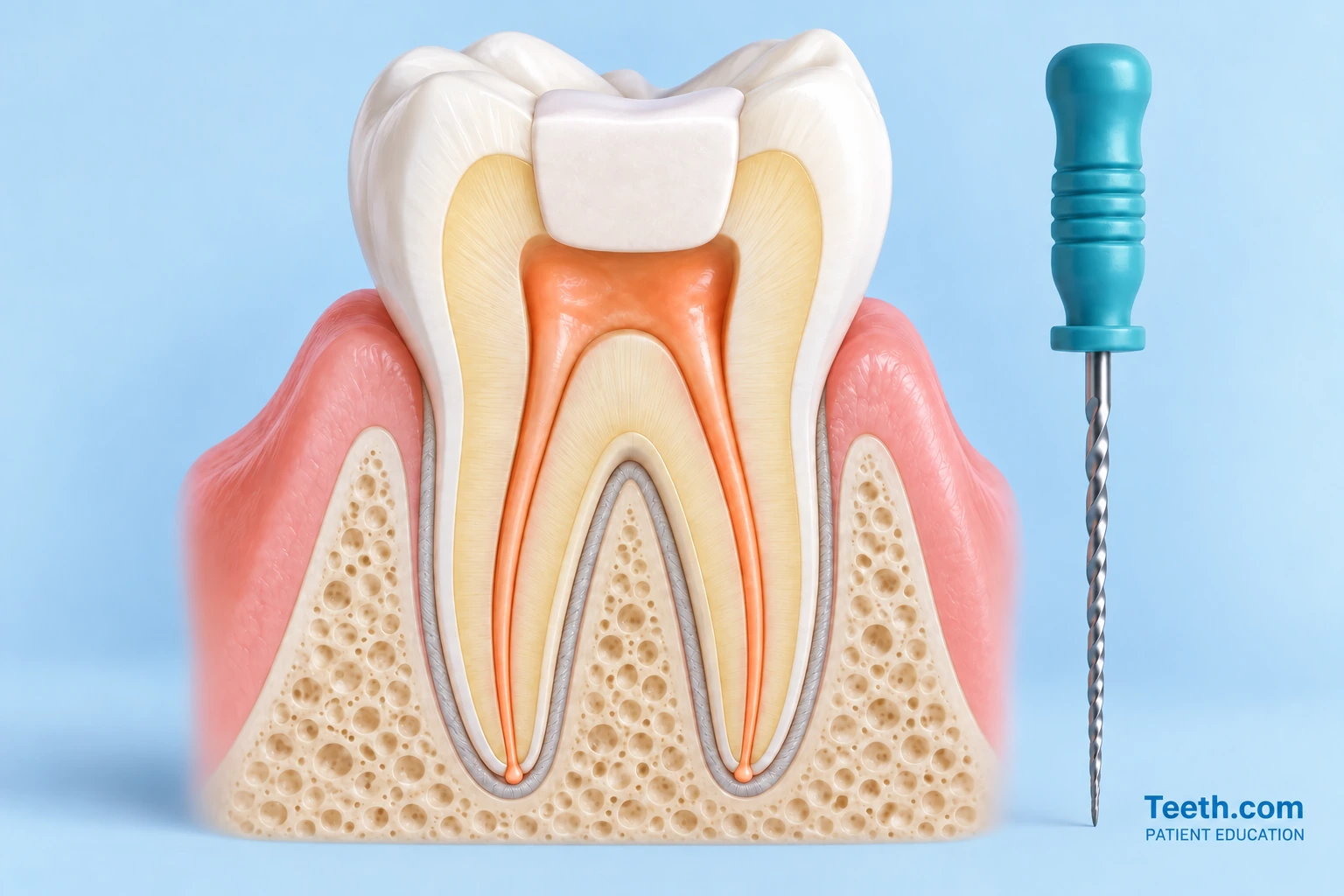
What it does
Root canal treatment removes inflamed or infected pulp while preserving the rest of a restorable tooth. An endodontist specializes in treating the inside of teeth; general dentists also perform root canal treatment.
Explore the source material ↗Watch the explanation
See the procedure in motion
Root canal treatment, step by step
AAE · hosted by UIC College of Dentistry
Connects to YouTube when you choose to load.Root canal treatment, step by step
Follow the treatment inside a tooth, including cleaning, shaping and sealing the canals.
If the player is unavailable, use the direct video link. Videos are external educational resources, not endorsements or personalized treatment advice. Publishers may include advertising; availability and captions vary. Loading connects to the video host and may share connection information or use cookies. Privacy notice.
What usually happens
The sequence and number of visits depend on the individual case.
Examine and numb
The dentist assesses the tooth and imaging, provides local anesthesia and isolates the tooth with a dental dam.
Clean the canals
An opening allows removal of affected pulp, cleaning and shaping of the canals.
Fill and seal
The prepared canals are filled and the opening is sealed. Treatment may require more than one visit.
Protect the tooth
A final restoration, often a crown, protects the tooth. Complete this follow-up as directed.
Benefits, limits & trade-offs
Temporary tenderness can occur. Persistent problems, new decay or fractures can require further care. A microscope or 3D scan may help selected cases; neither guarantees success.
Watch & explore further
Open the publisher’s page for videos, animations or more detailed reading.
External media opens only when you choose a link. Publishers may show advertisements or use cookies. Links do not imply endorsement or a partnership. Illustrations on Teeth.com are AI-generated, simplified explanations, not patient images.
Questions for your dentist
- Can this tooth be restored predictably?
- Who will provide the final restoration, and when?
- Would a specialist or additional imaging change the plan?
Take the next step
Look for offices offering this care
Search for root canal treatment in your area, then confirm the service with the office.
Opening Google Maps shares your search terms with Google. Results and rankings come from Google. Teeth.com has not verified these offices, their equipment, training or availability. A listing is not a recommendation.
Before you book
- Confirm that the office offers the specific procedure or technology you want to discuss.
- Ask who performs the treatment and about their relevant training and experience.
- Discuss whether it suits your situation, alternatives, the total fee and follow-up care.